Designing an efficient Laboratory Gas Distribution System is a critical aspect of modern laboratory infrastructure. It directly impacts safety, operational efficiency, compliance, and the accuracy of experimental outcomes. A well-designed laboratory gas pipeline system ensures a continuous and controlled supply of gases while minimizing risks such as leaks, contamination, and pressure fluctuations. In today’s advanced laboratory environments, integrating smart technologies and scalable designs has become essential.
This comprehensive guide explores each stage of designing a high-performance lab gas distribution system, with practical insights and industry-backed strategies, including the role of trusted providers like Ziebaq in delivering innovative and reliable solutions.
Understanding Laboratory Requirements and Gas Demand
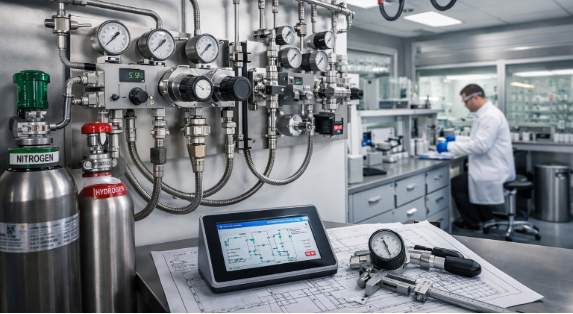
The foundation of designing an efficient Laboratory Gas Distribution System begins with a detailed understanding of laboratory requirements. Every lab operates differently depending on its domain—pharmaceutical, chemical, biotechnology, or research—and each has unique gas consumption patterns. Identifying the types of gases required is the first step. These may include inert gases like nitrogen, reactive gases such as hydrogen, or high-purity specialty gases used in analytical instruments.
In addition to gas types, it is essential to evaluate the number of workstations, peak usage times, and required flow rates. Pressure requirements must also be clearly defined, as different instruments demand varying levels of pressure stability. Another critical factor is anticipating future expansion. Laboratories often grow, and a system designed without scalability can lead to costly modifications later.
A well-planned laboratory gas pipeline system should account for redundancy to ensure uninterrupted supply during maintenance or cylinder replacement. Ziebaq emphasizes a consultative approach, analyzing current and future operational needs before designing customized solutions. This ensures that the system not only meets immediate demands but also adapts to evolving laboratory requirements.
By conducting a thorough requirement analysis, laboratories can avoid underperformance, inefficiencies, and safety hazards. This step sets the groundwork for a robust, efficient, and future-ready lab gas distribution system.
Selecting the Appropriate Gas Supply Method
Choosing the correct gas supply method is a crucial step in designing an efficient Laboratory Gas Distribution System. The supply source determines the reliability, cost-efficiency, and operational convenience of the entire system. Laboratories can choose from individual gas cylinders, centralized manifold systems, or bulk storage solutions depending on their scale and gas consumption patterns.
For smaller laboratories with limited gas usage, standalone cylinders may suffice. However, they often require frequent replacement and manual handling, which increases the risk of human error and operational downtime. For medium-scale laboratories, cylinder manifold systems provide a more efficient solution. These systems connect multiple cylinders, ensuring a continuous gas supply with automatic switchover when one cylinder is depleted.
Large laboratories and industrial research facilities benefit from bulk gas storage systems, which offer high capacity and reduced operational interruptions. These systems significantly improve efficiency by minimizing the need for frequent refilling and handling.
An efficient laboratory gas pipeline system integrates the chosen supply method seamlessly with the distribution network. Ziebaq specializes in designing centralized gas supply systems that enhance reliability and reduce manual intervention. Their solutions focus on optimizing gas usage while ensuring consistent pressure and flow.
Ultimately, selecting the right gas supply method ensures operational continuity, reduces costs, and enhances safety. It forms the backbone of a dependable and scalable lab gas distribution system, capable of meeting both current and future laboratory demands.
Designing an Optimized Pipeline Layout
An optimized pipeline layout is essential for achieving efficiency in a Laboratory Gas Distribution System. The layout directly influences gas flow, pressure stability, and overall system performance. Poorly designed pipelines can lead to pressure drops, contamination risks, and increased maintenance costs.
The primary goal in designing a lab gas distribution system layout is to ensure the shortest and most direct routes between the gas source and usage points. Minimizing bends and joints is critical, as these can disrupt flow and create potential leak points. Each gas type should have a dedicated pipeline to prevent cross-contamination, especially in laboratories dealing with high-purity gases.
Proper labeling and color coding of pipelines are also essential for safety and operational clarity. Engineers must consider accessibility for maintenance while designing the layout, ensuring that critical components such as valves and regulators are easy to reach.
Ziebaq leverages advanced design tools and engineering expertise to create efficient pipeline layouts tailored to specific laboratory environments. Their approach ensures optimal gas flow, reduced pressure loss, and enhanced safety.
Additionally, incorporating loop systems or ring main designs can improve redundancy and maintain consistent pressure across all endpoints. This is particularly beneficial in large laboratories with multiple usage points.
A well-planned pipeline layout not only improves efficiency but also enhances the longevity and reliability of the laboratory gas pipeline system, making it a cornerstone of effective system design.
Choosing the Right Materials for Durability and Purity
Material selection is a critical factor in ensuring the efficiency and reliability of a Laboratory Gas Distribution System. The materials used in pipelines and components directly affect gas purity, system durability, and maintenance requirements. Choosing inappropriate materials can lead to contamination, corrosion, and system failure.
Stainless steel, particularly SS 316, is widely regarded as the best choice for high-purity and corrosive gases. It offers excellent resistance to corrosion and ensures minimal contamination, making it ideal for sensitive laboratory applications. Copper pipelines are another common option, suitable for non-corrosive gases and cost-effective installations.
For specialized applications, coated or electropolished materials may be used to further enhance purity levels. These materials reduce particle generation and ensure the integrity of the gas being delivered.
An efficient lab gas distribution system must also consider compatibility between materials and the gases being transported. Chemical reactions between gases and pipeline materials can compromise both safety and performance.
Ziebaq prioritizes the use of high-quality materials in their laboratory gas pipeline systems, ensuring long-term reliability and compliance with industry standards. Their solutions are designed to maintain gas purity while minimizing maintenance costs.
Selecting the right materials not only enhances system performance but also extends its lifespan. It is a crucial step in building a robust and efficient Laboratory Gas Distribution System that meets the highest standards of quality and safety.
Integrating Pressure Regulation and Control Systems
Pressure regulation is at the heart of an efficient Laboratory Gas Distribution System. Maintaining consistent pressure levels is essential for accurate experimental results and safe operations. Fluctuations in pressure can lead to inconsistent outcomes and potential hazards.
A well-designed lab gas distribution system incorporates multi-stage pressure regulation. This includes primary regulators at the gas source and secondary regulators near the point of use. Flow meters and control valves are also essential components, allowing precise control over gas delivery.
Automatic switchover systems play a vital role in maintaining uninterrupted supply. These systems seamlessly switch between gas sources when one is depleted, ensuring continuous operation without manual intervention.
Ziebaq integrates advanced pressure control technologies into their systems, ensuring stability and reliability. Their designs focus on minimizing pressure drops and maintaining consistent flow across all usage points.
Digital monitoring systems can further enhance pressure control by providing real-time data and alerts. This allows operators to identify and address issues promptly.
By implementing robust pressure regulation mechanisms, laboratories can ensure the efficiency, accuracy, and safety of their laboratory gas pipeline system. This step is essential for achieving optimal performance and maintaining high operational standards.
Implementing Safety Measures and Compliance Standards
Safety is a fundamental aspect of designing a Laboratory Gas Distribution System. Laboratories deal with potentially hazardous gases, making it essential to implement comprehensive safety measures and adhere to industry regulations.
Key safety features include gas leak detection systems, emergency shut-off valves, and pressure relief devices. Proper ventilation systems are also crucial to prevent the accumulation of hazardous gases. For flammable gases, flame arrestors and explosion-proof equipment are necessary.
Compliance with standards such as ISO, NFPA, and OSHA ensures that the system meets global safety requirements. These standards provide guidelines for design, installation, and maintenance, helping laboratories minimize risks and ensure safe operations.
Ziebaq places a strong emphasis on safety and compliance in their laboratory gas pipeline systems. Their solutions are designed to meet stringent industry standards, providing peace of mind to laboratory operators.
Training personnel on safety protocols is equally important. Even the most advanced system can fail if not operated correctly. Regular audits and inspections help maintain compliance and identify potential issues.
By prioritizing safety and adhering to regulations, laboratories can create a secure and efficient lab gas distribution system. This not only protects personnel and equipment but also ensures uninterrupted operations.
Incorporating Automation and Smart Monitoring Systems
Modern laboratories are increasingly adopting automation to enhance the efficiency of their Laboratory Gas Distribution System. Smart technologies enable real-time monitoring, remote control, and predictive maintenance, reducing manual intervention and improving reliability.
Digital pressure sensors and flow monitoring systems provide continuous data on system performance. Automated alerts notify operators of any anomalies, such as pressure drops or leaks, allowing for immediate action. Remote control capabilities enable adjustments without physical intervention, saving time and effort.
IoT-enabled systems take automation a step further by integrating data analytics. These systems can predict maintenance needs, optimize gas usage, and improve overall efficiency. This is particularly beneficial for large laboratories with complex lab gas distribution systems.
Ziebaq incorporates advanced automation features into their solutions, ensuring that laboratories stay ahead of technological advancements. Their systems are designed to provide actionable insights and enhance operational control.
Automation not only improves efficiency but also enhances safety by reducing human error. It allows laboratories to maintain consistent performance while minimizing downtime.
Integrating smart monitoring systems is a forward-thinking approach to designing a laboratory gas pipeline system, ensuring long-term efficiency and adaptability in an evolving technological landscape.
Planning Maintenance and Future Scalability
An efficient Laboratory Gas Distribution System is not just about initial design—it must also be easy to maintain and adaptable to future needs. Regular maintenance ensures that the system operates at peak efficiency and prevents unexpected failures.
Designing the system with accessible components is crucial. Valves, regulators, and monitoring devices should be easy to inspect and replace. Routine maintenance tasks include checking for leaks, monitoring pressure levels, and calibrating instruments.
Scalability is another key consideration. Laboratories often expand their operations, requiring additional gas lines or increased capacity. A well-designed lab gas distribution system should include provisions for future upgrades, such as extra pipeline capacity and modular components.
Ziebaq emphasizes future-ready designs, ensuring that their laboratory gas pipeline systems can adapt to changing requirements. Their solutions minimize the need for major modifications, saving time and costs in the long run.
By planning for maintenance and scalability, laboratories can extend the lifespan of their system and ensure consistent performance. This proactive approach is essential for building a reliable and efficient Laboratory Gas Distribution System that supports long-term growth and success.
Conclusion
Designing an efficient Laboratory Gas Distribution System requires a comprehensive approach that balances performance, safety, and scalability. From understanding laboratory requirements to integrating advanced automation, each step plays a vital role in creating a reliable system.
By leveraging high-quality materials, optimized layouts, and smart technologies, laboratories can achieve consistent gas delivery and enhanced operational efficiency. Partnering with experienced providers like Ziebaq further ensures that the system meets modern standards and adapts to future needs.
A well-designed lab gas distribution system is more than just infrastructure—it is a critical component of successful laboratory operations, enabling precision, safety, and innovation.