Introduction
The Growing Importance of Environmental Control in Cleanrooms
Cleanrooms are specialized environments designed to maintain strict control over airborne particles, contaminants, temperature, humidity, and air pressure. These controlled environments play a crucial role in industries such as pharmaceuticals, biotechnology, healthcare, electronics manufacturing, semiconductor production, aerospace, and medical device manufacturing. In these sectors, even minor environmental fluctuations can compromise product quality, reduce manufacturing efficiency, and create compliance issues. This is why cleanroom operators invest heavily in environmental management systems that ensure consistent and reliable operating conditions.
Among the many factors that influence cleanroom performance, humidity and temperature control are two of the most critical. Maintaining the correct balance is essential for protecting sensitive materials, supporting manufacturing processes, and ensuring employee comfort. Excessive humidity can encourage microbial growth, corrosion, and product degradation, while low humidity can generate static electricity that damages electronic components and attracts particles. Likewise, unstable temperatures can affect equipment performance, alter material characteristics, and disrupt manufacturing consistency.
Modern Clean Rooms Solutions are specifically designed to address these challenges through advanced HVAC systems, humidity control technologies, intelligent monitoring platforms, and automated environmental management systems. These technologies work together to maintain optimal operating conditions while supporting contamination control and regulatory compliance.
As industries continue to demand higher levels of cleanliness and precision, environmental control strategies have become increasingly sophisticated. Companies seeking dependable and efficient clean room solutions often rely on trusted providers such as Ziebaq, which specializes in delivering innovative cleanroom systems tailored to the unique requirements of various industries. Understanding the importance of humidity and temperature management is the first step toward creating a high-performing cleanroom environment that supports productivity, quality assurance, and long-term operational success.
Why Humidity and Temperature Control Matter in Cleanrooms
Protecting Product Quality and Process Integrity
Humidity and temperature control are fundamental components of any successful cleanroom operation. These environmental factors directly influence product quality, manufacturing consistency, and contamination control. In highly regulated industries, maintaining stable environmental conditions is not simply a recommendation but a necessity. Products manufactured inside cleanrooms often involve sensitive materials that can be negatively affected by fluctuations in temperature or moisture levels.
For example, pharmaceutical products may absorb excess moisture from the environment, altering their chemical composition and reducing effectiveness. Semiconductor components can become damaged due to static electricity generated by low humidity conditions. Medical devices and biotechnology products may experience performance issues if exposed to environmental instability during manufacturing or storage. Effective Clean Rooms Solutions are designed to prevent these problems by maintaining carefully controlled conditions throughout the facility.
Enhancing Employee Comfort and Productivity
Cleanroom personnel spend extended periods working in controlled environments while wearing protective garments that can be physically demanding. Temperature and humidity levels significantly impact worker comfort and productivity. Excessively warm environments can increase perspiration, which contributes to contamination risks and employee fatigue. Conversely, extremely dry conditions may cause skin irritation, eye discomfort, and respiratory issues.
By maintaining optimal environmental conditions, organizations create a more comfortable workplace that supports employee performance and reduces operational disruptions. Modern clean room solutions incorporate sophisticated environmental control systems that balance product protection with worker comfort.
Supporting Regulatory Compliance
Many industries must comply with strict regulatory requirements regarding environmental control and contamination management. Regulatory agencies frequently require documented evidence demonstrating that cleanrooms consistently maintain specified temperature and humidity ranges. Reliable monitoring systems, automated controls, and comprehensive reporting capabilities help facilities meet these requirements while ensuring operational excellence. This makes environmental control a key component of both quality assurance and regulatory compliance strategies.
Understanding Cleanroom Temperature Requirements
Maintaining Consistent Thermal Conditions
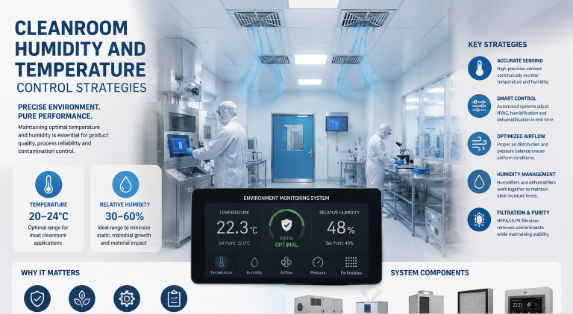
Temperature control is one of the most important aspects of cleanroom management because many manufacturing processes depend on stable thermal conditions. Cleanrooms are designed to operate within specific temperature ranges that vary depending on the industry and application. Pharmaceutical cleanrooms typically maintain temperatures between 18°C and 22°C, while semiconductor and electronics facilities may require even tighter temperature tolerances to protect sensitive components and ensure process consistency.
Maintaining a stable temperature is not simply about comfort. Variations of just a few degrees can affect material properties, equipment performance, and production outcomes. In pharmaceutical manufacturing, temperature fluctuations can impact chemical reactions and product stability. In electronics manufacturing, excessive heat can influence component precision and increase the risk of defects. As a result, advanced Clean Rooms Solutions are engineered to maintain precise thermal conditions around the clock.
Factors That Influence Temperature Stability
Several factors contribute to temperature variations within a cleanroom. Equipment such as production machinery, computers, lighting systems, and monitoring devices generates heat continuously. Occupancy levels can also influence room temperature, particularly in facilities where employees spend long hours inside controlled environments.
External weather conditions present another challenge. Facilities located in regions with extreme temperatures must compensate for seasonal changes while maintaining stable indoor conditions. To address these challenges, clean room solutions incorporate sophisticated HVAC systems capable of adjusting airflow and cooling capacity in real time.
Benefits of Proper Temperature Control
Stable temperatures improve manufacturing consistency, protect sensitive products, and support employee productivity. Effective temperature management also extends equipment lifespan by reducing thermal stress and minimizing maintenance requirements. By implementing reliable environmental control systems, organizations can achieve better product quality, reduce operational risks, and maintain compliance with industry regulations. Companies like Ziebaq help facilities achieve these goals through customized cleanroom designs and advanced temperature management technologies.
Understanding Cleanroom Humidity Requirements
Why Humidity Control Is Essential
Humidity management is equally important in maintaining cleanroom performance. Relative humidity levels influence contamination control, electrostatic discharge prevention, material stability, and microbial growth. Most cleanrooms operate within a relative humidity range of 30% to 60%, although exact requirements vary according to industry standards and manufacturing processes.
High humidity can create conditions that encourage mold, bacteria, and microbial contamination. Excess moisture may also damage sensitive products, corrode equipment, and affect packaging integrity. Conversely, low humidity levels can increase static electricity, which poses significant risks in electronics and semiconductor manufacturing environments.
Modern Clean Rooms Solutions are designed to maintain humidity within narrow tolerances to ensure optimal operating conditions and minimize environmental risks.
Industry-Specific Humidity Considerations
Different industries have unique humidity requirements. Semiconductor manufacturers often maintain precise humidity levels to reduce electrostatic discharge and protect delicate circuitry. Pharmaceutical facilities require controlled humidity to preserve product stability and maintain sterile conditions. Biotechnology laboratories depend on stable humidity levels to ensure reliable research outcomes and sample integrity.
Medical device manufacturers also rely on humidity control to maintain product consistency and support regulatory compliance. Because each industry has distinct environmental requirements, customized clean room solutions are often necessary to achieve optimal performance.
Long-Term Benefits of Effective Humidity Management
Proper humidity control improves product quality, extends equipment life, and reduces contamination risks. It also supports regulatory compliance by maintaining documented environmental conditions within approved limits. Through advanced monitoring systems and humidity control technologies, Ziebaq helps organizations create reliable cleanroom environments that support long-term operational success.
Key Challenges in Cleanroom Environmental Control
Managing External and Internal Influences
Maintaining precise temperature and humidity levels in a cleanroom is a complex task. Environmental conditions are constantly affected by both external and internal factors that can disrupt stability. Understanding these challenges is essential for developing effective control strategies.
External climate conditions are among the most significant influences. Facilities located in hot, humid, or highly variable climates must work harder to maintain consistent indoor conditions. Seasonal changes can place additional demands on HVAC and humidity control systems.
Equipment and Occupancy Challenges
Manufacturing equipment generates substantial heat during operation. In highly automated facilities, multiple machines running simultaneously can create significant thermal loads that affect temperature stability. Similarly, personnel contribute heat and moisture through normal activities, particularly in environments with high occupancy levels.
Cleanrooms also require frequent air exchanges to maintain cleanliness standards. While necessary for contamination control, introducing fresh air can alter humidity and temperature conditions, requiring continuous system adjustments.
Addressing Environmental Control Challenges
Modern Clean Rooms Solutions use advanced engineering techniques to address these challenges. Intelligent monitoring systems provide real-time data that allows operators to respond quickly to environmental changes. Automated controls adjust airflow, cooling capacity, humidification, and dehumidification functions as needed.
By identifying and addressing potential sources of instability, organizations can maintain consistent environmental conditions while minimizing energy consumption and operational disruptions. Ziebaq incorporates these strategies into its cleanroom solutions to deliver reliable and efficient performance across a wide range of industries.
Effective Temperature Control Strategies
Advanced HVAC Technologies
Heating, ventilation, and air conditioning systems serve as the foundation of temperature control in cleanrooms. Modern HVAC systems are designed to maintain highly precise environmental conditions while supporting contamination control requirements. They continuously regulate airflow, cooling, heating, and filtration to ensure stable operating conditions.
High-performance HVAC systems used in advanced Clean Rooms Solutions can respond rapidly to temperature changes caused by equipment operation, occupancy fluctuations, or external weather conditions. This responsiveness helps maintain consistent environmental parameters throughout the facility.
Variable Air Volume and Zoned Control
Variable Air Volume systems adjust airflow according to current environmental conditions. This approach improves energy efficiency while maintaining temperature stability. Instead of operating at a constant rate, VAV systems increase or decrease airflow as needed, reducing unnecessary energy consumption.
Zoned temperature control is another effective strategy. Different areas within a cleanroom facility may require unique environmental conditions. Zoned systems allow operators to manage these areas independently, ensuring optimal conditions for each manufacturing process.
Continuous Monitoring and Optimization
Temperature sensors placed throughout the cleanroom provide real-time data that supports proactive environmental management. Automated systems analyze this information and make immediate adjustments when deviations occur.
Organizations that implement comprehensive temperature control strategies benefit from improved product quality, enhanced operational efficiency, and lower maintenance costs. Ziebaq integrates advanced HVAC technologies and monitoring systems into its clean room solutions to deliver reliable temperature control performance.
Effective Humidity Control Strategies
Advanced Humidification Methods
Humidification systems are essential when environmental conditions become excessively dry. These systems introduce controlled amounts of moisture into the air to maintain optimal humidity levels. Common technologies include steam humidifiers, ultrasonic humidifiers, and evaporative systems.
Each approach offers specific advantages depending on cleanroom requirements. Steam humidification provides precise control, while ultrasonic systems offer energy-efficient operation. Modern Clean Rooms Solutions often incorporate multiple humidity control technologies to achieve maximum flexibility and performance.
Dehumidification for Moisture Management
Excess humidity can be just as problematic as low humidity. Dehumidification systems remove moisture from the air, preventing condensation, microbial growth, and material degradation. Mechanical refrigeration systems and desiccant-based technologies are commonly used for this purpose.
Desiccant dehumidifiers are particularly effective in environments requiring extremely low humidity levels. These systems provide precise moisture control and maintain stable conditions even under challenging environmental circumstances.
Automated Humidity Management
Automation plays a significant role in modern humidity control strategies. Sensors continuously monitor relative humidity levels and communicate with central control systems. When humidity deviates from specified limits, automated adjustments occur immediately.
This approach improves reliability, reduces manual intervention, and ensures consistent environmental conditions. Ziebaq incorporates advanced humidity control technologies into its cleanroom solutions, helping organizations maintain optimal operating environments while reducing energy consumption and operational risks.
The Role of Air Handling Units (AHUs)
Supporting Environmental Stability
Air Handling Units are among the most important components of cleanroom infrastructure. These systems regulate airflow, temperature, humidity, and air cleanliness while ensuring contaminants are effectively removed from the environment.
AHUs distribute conditioned air throughout the cleanroom while maintaining pressure differentials required for contamination control. Their performance directly affects the overall effectiveness of environmental management systems.
Filtration and Air Distribution
Modern AHUs incorporate high-efficiency filtration technologies such as HEPA and ULPA filters. These filters remove airborne particles before conditioned air enters the cleanroom environment.
Proper air distribution is equally important. Uniform airflow patterns help eliminate stagnant zones and ensure consistent environmental conditions throughout the facility. Advanced Clean Rooms Solutions rely on carefully engineered AHU systems to achieve these objectives.
Enhancing Operational Efficiency
High-performance AHUs contribute to improved environmental stability, reduced contamination risks, and greater energy efficiency. By integrating intelligent controls and efficient filtration technologies, organizations can optimize cleanroom performance while controlling operational costs. Ziebaq designs and implements advanced air handling systems tailored to the specific needs of each facility.
Smart Monitoring and Automation Technologies
Real-Time Environmental Intelligence
Modern cleanrooms increasingly rely on digital technologies to maintain environmental stability. Sensors continuously monitor temperature, humidity, air pressure, and particle concentrations throughout the facility.
This real-time information provides valuable insights into system performance and helps operators identify potential issues before they affect production activities.
Automated Response Systems
Automation enables cleanroom systems to react immediately to environmental changes. Instead of relying on manual adjustments, intelligent control platforms automatically regulate HVAC equipment, humidifiers, and dehumidifiers based on current conditions.
These automated responses improve accuracy, reduce downtime, and support consistent environmental performance.
Compliance and Data Management
Smart monitoring platforms also simplify regulatory compliance. Detailed environmental records can be stored, analyzed, and presented during audits. Organizations benefit from improved traceability and enhanced quality assurance capabilities.
Ziebaq incorporates advanced monitoring and automation technologies into its clean room solutions, helping facilities achieve greater efficiency, reliability, and regulatory compliance.
Conclusion
Building Reliable and Efficient Cleanroom Environments
Temperature and humidity control are essential components of successful cleanroom operations. These environmental factors influence product quality, contamination control, employee comfort, equipment performance, and regulatory compliance. Maintaining stable conditions requires a combination of advanced HVAC systems, humidity management technologies, air handling equipment, and intelligent monitoring platforms.
Modern Clean Rooms Solutions provide organizations with the tools necessary to achieve precise environmental control while improving operational efficiency and reducing long-term costs. As manufacturing standards continue to evolve, the importance of sophisticated environmental management systems will only increase.
By partnering with experienced providers such as Ziebaq, organizations can implement customized clean room solutions that meet the highest standards of performance, reliability, and compliance. Through careful planning, advanced technology, and continuous monitoring, cleanrooms can maintain optimal operating conditions that support productivity, product quality, and long-term business success.