Designing a clean room is a highly technical process that requires a deep understanding of contamination control, airflow dynamics, and regulatory compliance. Industries such as pharmaceuticals, biotechnology, electronics, and healthcare depend heavily on efficient and compliant environments to maintain product quality and safety. This is where professional Clean Rooms Solutions become essential. However, even with the best intentions, many organizations make critical design mistakes that can compromise performance and increase operational costs.
A poorly designed clean room can lead to contamination risks, failed audits, and expensive redesigns. This is why businesses today are turning to experienced providers like Ziebaq, who specialize in delivering advanced and customized clean room solutions. Their expertise ensures that every aspect of the clean room—from layout and airflow to materials and maintenance—is optimized for efficiency and compliance.
In this article, we will explore the most common clean room design mistakes and provide practical strategies to avoid them. Each section highlights a specific issue, explains why it occurs, and outlines actionable solutions to ensure long-term success. By understanding these pitfalls, businesses can make informed decisions and invest in Clean Rooms Solutions that deliver reliability, scalability, and regulatory compliance.
Poor Clean Room Layout Planning
One of the most fundamental mistakes in Clean Rooms Solutions is poor layout planning. The layout of a clean room directly impacts workflow efficiency, contamination control, and overall productivity. When the design does not account for proper movement of personnel, materials, and equipment, it creates bottlenecks and increases the risk of cross-contamination.
A common issue is the lack of a unidirectional flow. In an ideal clean room, movement should progress from less clean areas to more controlled environments. However, poorly planned layouts often result in overlapping pathways, where clean and contaminated materials intersect. This significantly increases the chances of particle transfer and compromises the integrity of the clean room.
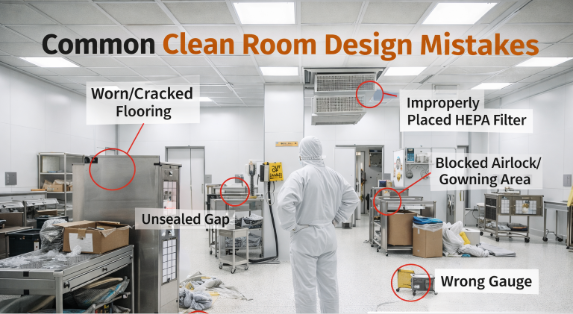
Another challenge is the absence of dedicated zones such as gowning areas, airlocks, and pass-through chambers. Without these critical components, it becomes difficult to maintain cleanliness levels and enforce contamination control protocols. Additionally, insufficient space planning can lead to overcrowding, making it harder to maintain proper airflow and cleanliness standards.
To avoid these issues, it is essential to adopt a strategic design approach. This includes mapping out workflows, defining separate zones for different activities, and ensuring adequate space for operations. Partnering with experts like Ziebaq ensures that layout planning is aligned with industry standards and operational requirements. Their expertise in clean room solutions helps create efficient, contamination-free environments that support seamless operations and compliance.
Improper HVAC System Design
The HVAC system is the backbone of any clean room, making its design a critical component of effective Clean Rooms Solutions. Unfortunately, improper HVAC planning is a common mistake that can severely impact clean room performance. The primary role of the HVAC system is to control airflow, filtration, temperature, and humidity, all of which are essential for maintaining a controlled environment.
One of the most frequent issues is inadequate air changes per hour (ACH). If the airflow is insufficient, contaminants are not effectively removed, leading to a buildup of particles. On the other hand, excessive airflow can create turbulence, which disrupts laminar flow and spreads contaminants throughout the space. Achieving the right balance is crucial for optimal performance.
Another common mistake is improper selection or placement of filters. High-efficiency particulate air (HEPA) or ultra-low penetration air (ULPA) filters must be strategically installed to ensure maximum filtration efficiency. Incorrect pressure differentials between rooms can also lead to contamination, as air may flow from less clean areas into more controlled zones.
To avoid these challenges, businesses must invest in well-engineered clean room solutions that prioritize precise HVAC design. Ziebaq specializes in developing advanced HVAC systems that meet strict ISO standards and ensure consistent airflow and filtration. By integrating smart monitoring systems and energy-efficient technologies, they help maintain optimal conditions while reducing operational costs.
Ignoring Clean Room Classification Standards
One of the most critical mistakes in clean room design is ignoring classification standards, which are essential for regulatory compliance and operational efficiency. Clean rooms are classified based on the number of particles allowed per cubic meter of air, typically following ISO 14644 standards. Failing to design according to these standards can result in non-compliance, failed inspections, and costly redesigns.
Many organizations make the mistake of starting the design process without clearly defining the required cleanliness level. This leads to mismatched specifications, where the clean room either falls short of regulatory requirements or is over-engineered, resulting in unnecessary costs. Additionally, some businesses fail to consider future scalability, making it difficult to upgrade the clean room as operational needs evolve.
Another issue is the lack of proper validation and testing. Even if a clean room is designed to meet specific standards, it must be tested and certified to ensure compliance. Without regular validation, there is no guarantee that the environment maintains the required cleanliness levels over time.
To avoid these pitfalls, it is essential to integrate compliance into every stage of the design process. Professional Clean Rooms Solutions providers like Ziebaq ensure that all designs align with industry standards and regulatory requirements. Their expertise includes detailed planning, validation, and documentation, ensuring that clean rooms meet and maintain the desired classification levels. By prioritizing compliance, businesses can avoid costly mistakes and ensure long-term operational success.
Choosing the Wrong Materials
Material selection is a crucial aspect of clean room design that is often overlooked. Using inappropriate materials can lead to particle generation, contamination, and increased maintenance requirements. In Clean Rooms Solutions, every surface—from walls and floors to ceilings and fixtures—must be carefully chosen to support cleanliness and durability.
One common mistake is using porous or rough materials that trap dust and contaminants. These surfaces are difficult to clean and can become breeding grounds for microorganisms. Additionally, materials that degrade over time or react with cleaning agents can compromise the integrity of the clean room environment.
Another issue is the lack of chemical resistance. Clean rooms often require frequent cleaning with strong disinfectants, and materials must be able to withstand these conditions without deteriorating. Static electricity is also a concern, especially in industries like electronics, where electrostatic discharge can damage sensitive components.
To address these challenges, businesses should prioritize high-quality, non-porous, and easy-to-clean materials. Ziebaq incorporates advanced materials into its clean room solutions, ensuring long-term durability and compliance. Their approach includes selecting materials that are resistant to chemicals, easy to maintain, and compatible with industry-specific requirements.
By choosing the right materials, businesses can enhance cleanliness, reduce maintenance costs, and ensure the longevity of their clean room infrastructure.
Poor Contamination Control Strategy
A clean room’s primary purpose is to control contamination, yet many designs fail due to inadequate strategies. In Clean Rooms Solutions, contamination can originate from various sources, including personnel, equipment, and external environments. Without a comprehensive control plan, even the most advanced clean room can become ineffective.
One of the most common mistakes is underestimating the role of personnel. Human activity is a major source of contamination, as individuals shed particles and microorganisms. Without proper gowning procedures and training, contamination levels can quickly rise. Similarly, equipment and materials entering the clean room must be properly cleaned and controlled to prevent the introduction of particles.
Another issue is the lack of monitoring systems. Without real-time data on particle counts, airflow, and environmental conditions, it becomes difficult to identify and address contamination risks. This can lead to unnoticed issues that compromise product quality and safety.
To avoid these problems, businesses must implement a holistic contamination control strategy. This includes proper gowning protocols, airlocks, pass-through systems, and regular monitoring. Ziebaq provides comprehensive clean room solutions that address all aspects of contamination control, ensuring a safe and compliant environment.
By adopting a proactive approach, businesses can maintain high cleanliness standards and reduce the risk of contamination-related failures.
Overlooking Energy Efficiency
Energy efficiency is often overlooked in clean room design, yet it plays a significant role in long-term operational costs. Clean rooms require continuous airflow, filtration, and climate control, making them energy-intensive environments. Poorly designed systems can lead to excessive energy consumption and increased expenses.
One common mistake is using outdated or inefficient HVAC systems that consume more energy than necessary. Additionally, operating clean rooms at full capacity at all times, regardless of actual usage, leads to unnecessary energy waste. Lack of automation and monitoring further exacerbates the problem, as there is no way to optimize performance based on real-time conditions.
To address these challenges, modern Clean Rooms Solutions focus on energy-efficient design and smart technologies. Ziebaq integrates advanced systems that optimize airflow, reduce energy consumption, and maintain consistent performance. This includes variable air volume systems, energy-efficient filters, and automated controls that adjust conditions based on usage.
By prioritizing energy efficiency, businesses can significantly reduce operational costs while maintaining high performance standards. This not only improves profitability but also supports sustainability goals.
Lack of Maintenance Planning
A well-designed clean room requires ongoing maintenance to ensure consistent performance and compliance. However, many businesses fail to incorporate maintenance planning into their Clean Rooms Solutions, leading to system failures and contamination risks over time.
Common mistakes include neglecting filter replacements, ignoring equipment calibration, and failing to conduct regular inspections. Without a structured maintenance plan, small issues can escalate into major problems, resulting in downtime and costly repairs. Additionally, lack of staff training can lead to improper handling of equipment and compromised cleanliness standards.
To avoid these issues, businesses should develop a comprehensive maintenance strategy that includes regular inspections, scheduled servicing, and performance monitoring. Ziebaq offers end-to-end clean room solutions that include maintenance planning, ensuring long-term reliability and efficiency.
By investing in proper maintenance, businesses can extend the lifespan of their clean room systems, maintain compliance, and ensure consistent performance.
Not Partnering with the Right Experts
Choosing the wrong partner for clean room design and implementation is perhaps the most critical mistake. Clean rooms require specialized knowledge and experience, and working with inexperienced providers can lead to poor design, non-compliance, and increased costs.
Many businesses prioritize cost over expertise, resulting in substandard solutions that fail to meet requirements. Lack of technical knowledge and industry experience can lead to design flaws, inefficient systems, and compliance issues.
To avoid these risks, it is essential to work with experienced providers like Ziebaq. Their expertise in delivering advanced Clean Rooms Solutions ensures that every aspect of the project is handled with precision and professionalism. From design and construction to validation and maintenance, they provide comprehensive solutions tailored to specific industry needs.
Partnering with the right experts not only ensures compliance and performance but also provides peace of mind. With the right support, businesses can achieve optimal results and avoid costly mistakes.
Conclusion
Designing a clean room is a complex process that requires careful planning, technical expertise, and a commitment to quality. By avoiding common mistakes such as poor layout planning, improper HVAC design, and inadequate contamination control, businesses can create efficient and compliant environments.
Investing in professional Clean Rooms Solutions and partnering with trusted providers like Ziebaq ensures long-term success. With the right approach, clean rooms can deliver exceptional performance, support regulatory compliance, and drive operational efficiency.