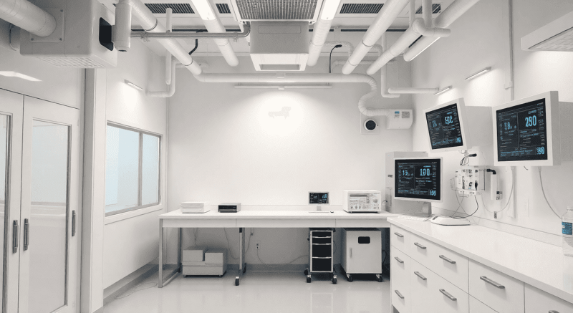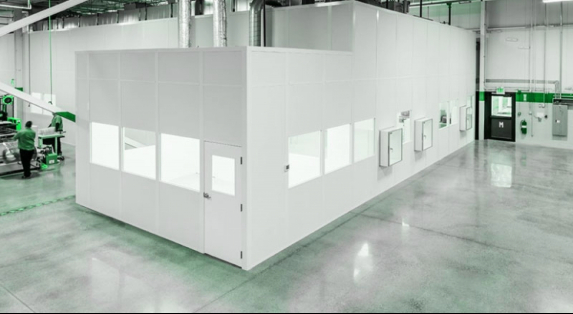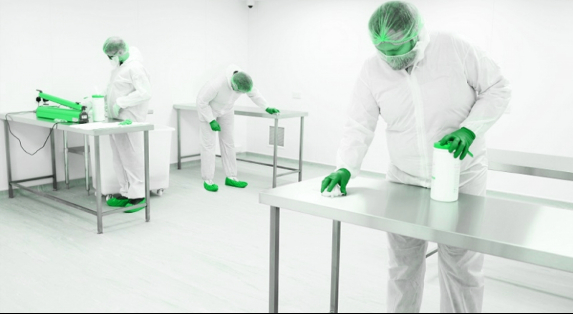
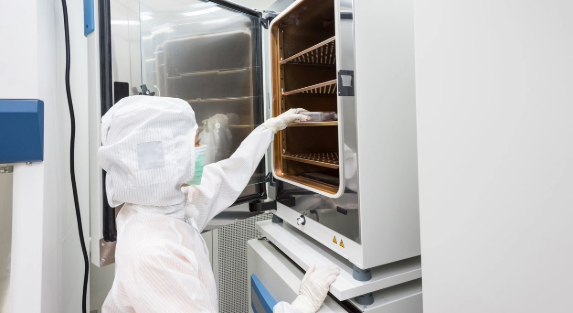
A cleanroom is designed to provide a controlled environment where contamination, particles, and other environmental variables are carefully managed. While much of the attention often goes toward particle counts and HEPA filtration, temperature and humidity monitoring are equally important.
Even relatively small changes in temperature or relative humidity can affect materials, equipment, processes, personnel comfort, and overall environmental conditions. That is why reliable Cleanroom Environmental Monitoring Systems are an essential part of many controlled environments.
Whether you operate a pharmaceutical manufacturing facility, biotechnology laboratory, medical device production area, electronics facility, or research environment, continuously understanding temperature and humidity conditions can help you identify problems before they become costly operational issues.
What Is Cleanroom Temperature and Humidity Monitoring?
Cleanroom temperature and humidity monitoring involves continuously or periodically measuring environmental conditions within controlled areas.
Temperature refers to how warm or cool the environment is, while relative humidity indicates the amount of moisture present in the air relative to the maximum amount the air can hold at a given temperature.
Modern cleanroom environmental monitoring systems can use sensors positioned at strategic locations throughout a facility. These sensors collect environmental data and transmit it to monitoring software or a centralized system.
Depending on the application, the system may provide:
- Real-time temperature readings
- Relative humidity measurements
- Continuous data logging
- Automated alerts
- Historical trends
- Configurable limits
- Alarm notifications
- Reports and audit trails
This allows facility teams to monitor environmental conditions rather than relying solely on occasional manual measurements.
Why Is Temperature Monitoring Important in a Cleanroom?
Temperature control is more than a matter of comfort. In many controlled environments, temperature can directly influence processes, materials, equipment, and other environmental parameters.
1. Helps Maintain Stable Environmental Conditions
Cleanrooms are designed around controlled environmental conditions. If temperature fluctuates significantly, other parameters can also be affected.
A reliable monitoring system allows facility personnel to identify unexpected changes quickly and determine whether corrective action is necessary.
Instead of discovering a temperature problem after a process has already been affected, real-time monitoring can provide an early warning.
2. Supports Product and Process Consistency
Certain manufacturing and laboratory processes can be sensitive to environmental conditions.
Changes in temperature may affect materials, chemical reactions, equipment performance, or product characteristics depending on the application.
Maintaining the appropriate environmental range helps create more consistent operating conditions.
The exact temperature requirements will vary depending on the facility, process, product, and applicable standards. This is why monitoring systems should be configured around the specific requirements of the cleanroom.
3. Protects Sensitive Equipment
Some equipment performs best within specific temperature ranges.
Excessive heat or unexpected temperature fluctuations may affect sensitive instruments, electronics, sensors, or other equipment used in controlled environments.
Temperature monitoring provides visibility into these conditions and can help facility teams identify environmental issues before they contribute to equipment problems.
Why Does Humidity Matter in a Cleanroom?
Humidity is another critical environmental parameter.
Relative humidity can influence static electricity, condensation, material behavior, microbial conditions, and personnel comfort. The acceptable humidity range depends on the cleanroom’s application and operational requirements.
Maintaining appropriate humidity levels therefore forms an important part of an effective environmental monitoring strategy.
4. Helps Manage Static Electricity
Low relative humidity can increase the risk of electrostatic discharge in certain environments.
This can be particularly important in facilities that manufacture or handle sensitive electronic components, semiconductor devices, or other electrostatic-sensitive products.
By continuously monitoring humidity, facility teams can identify conditions that could increase static-related risks.
5. Helps Prevent Excessive Moisture and Condensation
High humidity can create its own challenges.
When warm, moisture-laden air encounters a sufficiently cold surface, condensation can occur. In a controlled environment, unwanted moisture can potentially affect materials, equipment, surfaces, and processes.
Humidity monitoring provides visibility into changing conditions so that facility personnel can respond when readings move outside established limits.
6. Supports Appropriate Microbial Control
Humidity can influence the environmental conditions under which microorganisms survive and grow.
However, humidity control should not be viewed as a standalone microbial-control strategy. Cleanroom cleanliness, air filtration, cleaning procedures, personnel practices, and environmental monitoring all work together.
A comprehensive cleanroom environmental monitoring system can help organizations track humidity alongside other relevant parameters.
7. Helps Detect HVAC Problems Early
The HVAC system plays a central role in maintaining cleanroom temperature and humidity.
Unexpected changes in environmental readings can sometimes indicate an HVAC problem, sensor issue, airflow imbalance, or another operational condition that requires investigation.
For example, if temperature begins drifting consistently in one area while other areas remain stable, the monitoring data can help facility personnel identify where further investigation may be needed.
This makes environmental monitoring useful not only for compliance but also for facility management.
8. Provides Real-Time Alerts When Conditions Change
One of the major advantages of modern Cleanroom Environmental Monitoring Systems is the ability to generate alerts when readings exceed predefined limits.
Instead of relying on someone to manually check a gauge at a particular time, an automated system can monitor conditions continuously.
Depending on the system, alerts may be delivered through:
- Software notifications
- Text or mobile alerts
- Visual alarms
- Audible alarms
- Central monitoring dashboards
Early notification gives responsible personnel more time to investigate and respond.
9. Creates Valuable Historical Data
Environmental monitoring is not only about knowing what is happening right now.
Historical data can help organizations understand trends and identify recurring problems.
For example, monitoring data may reveal that:
- Temperature consistently rises during certain operating hours
- Humidity increases during particular seasons
- A specific room experiences repeated excursions
- HVAC performance changes over time
- Environmental conditions fluctuate after equipment changes
This information can support preventive maintenance and long-term facility optimization.
10. Supports Compliance and Documentation
Many regulated industries require documented evidence that environmental conditions are being appropriately controlled and monitored.
Depending on the facility and applicable regulations, organizations may need records showing that environmental parameters remained within specified limits.
Automated environmental monitoring systems can simplify data collection, storage, reporting, and review.
However, simply installing a monitoring system does not automatically make a facility compliant. The system itself must be appropriately selected, installed, calibrated, validated where required, and maintained according to the applicable quality and regulatory framework.
Temperature and Humidity Monitoring Should Work Together
Temperature and humidity are closely related.
As temperature changes, the air’s capacity to hold moisture also changes. This means monitoring one parameter without considering the other can provide an incomplete picture of environmental conditions.
For this reason, modern cleanroom monitoring systems commonly track temperature and relative humidity together.
When these measurements are combined with other environmental parameters, facility managers can develop a much clearer understanding of overall cleanroom performance.
What Should a Cleanroom Environmental Monitoring System Include?
The exact configuration depends on the facility, but an effective monitoring solution may include:
Sensors
High-quality sensors measure temperature and relative humidity at strategically selected locations.
Data Acquisition
The system collects readings from individual sensors and transfers the information to a centralized platform.
Monitoring Software
Software allows authorized personnel to view current readings, analyze historical trends, and generate reports.
Alerts and Alarms
Predefined alert and action limits can notify personnel when environmental conditions move outside acceptable ranges.
Data Storage
Historical data allows organizations to investigate trends, excursions, and recurring environmental issues.
Reporting
Automated reports can simplify routine review and provide documentation for quality and compliance processes.
Calibration and Maintenance
Sensors need appropriate calibration and ongoing maintenance to ensure reliable measurements.
Where Should Temperature and Humidity Sensors Be Installed?
Sensor placement matters.
Installing a sensor in an unsuitable location can produce readings that do not accurately represent the conditions of the monitored space.
Factors to consider may include:
- Room size
- Airflow patterns
- HVAC supply and return locations
- Equipment placement
- Potential heat sources
- Personnel movement
- Critical process areas
- Areas with known environmental variability
A professional environmental monitoring system provider can help determine appropriate sensor locations based on the cleanroom’s design and operational requirements.
Common Mistakes in Cleanroom Environmental Monitoring
Even a sophisticated monitoring system can deliver poor results if it is not properly implemented.
Some common mistakes include:
- Using unsuitable or low-quality sensors
- Installing too few sensors
- Poor sensor placement
- Ignoring calibration requirements
- Setting inappropriate alarm limits
- Failing to review historical data
- Relying entirely on manual readings
- Neglecting system maintenance
- Failing to investigate repeated excursions
- Treating monitoring as a compliance exercise rather than a quality-control tool
A well-designed monitoring strategy should consider the entire lifecycle of the system—not simply the initial installation.
Manual vs. Automated Environmental Monitoring
Manual measurements can be useful for certain applications, but they provide only periodic snapshots of environmental conditions.
Automated monitoring provides much greater visibility.
| Manual Monitoring | Automated Monitoring |
| Periodic readings | Continuous or scheduled monitoring |
| Greater dependence on personnel | Automated data collection |
| Limited historical visibility | Comprehensive data history |
| Delayed identification of issues | Real-time alerts possible |
| More manual recordkeeping | Automated reporting options |
| Difficult to identify short-term fluctuations | Easier trend analysis |
For facilities where environmental stability is critical, automated monitoring can provide a significant operational advantage.
Building a More Reliable Cleanroom Monitoring Strategy
Temperature and humidity should not be viewed in isolation.
An effective Cleanroom Environmental Monitoring System may integrate multiple parameters depending on the facility’s needs, including:
- Airborne particle levels
- Temperature
- Relative humidity
- Differential pressure
- Airflow
- Microbial contamination
- Other facility-specific environmental parameters
By bringing relevant information together, facility teams can make better-informed decisions and respond more quickly when environmental conditions change.
Choose the Right Cleanroom Environmental Monitoring Solution
Every cleanroom has different requirements. A pharmaceutical production facility may have very different monitoring needs from a semiconductor manufacturing area or research laboratory.
When selecting an environmental monitoring solution, consider:
- Required monitoring parameters
- Number and location of monitoring points
- Sensor accuracy
- Data logging capabilities
- Alert functionality
- Software usability
- Data security and integrity
- Reporting requirements
- Calibration and maintenance
- Scalability
- Integration with existing facility systems
The goal should be to select a system that fits the facility’s operational and quality requirements rather than simply choosing the system with the longest list of features.
Final Thoughts
Temperature and humidity may not always be the first things people think about when discussing cleanrooms, but they are fundamental parts of maintaining a controlled environment.
Reliable Cleanroom Environmental Monitoring Systems provide continuous visibility into these conditions, helping organizations identify changes, respond to excursions, analyze trends, protect sensitive processes, and maintain appropriate environmental control.
Whether you are designing a new cleanroom or upgrading an existing facility, temperature and humidity monitoring should be considered an essential part of your overall environmental monitoring strategy.
Ready to Improve Your Cleanroom Monitoring?
Don’t wait until an environmental excursion affects your process or facility performance.
Talk to an experienced cleanroom environmental monitoring specialist today to assess your temperature and humidity monitoring requirements. A properly designed monitoring solution can give your team better visibility, faster alerts, reliable data, and greater confidence in your controlled environment. Contact us to discuss your cleanroom monitoring needs and explore the right solution for your facility.