Introduction: The Evolving Role of the Laboratory Biosafety Cabinet in 2026
The Laboratory Biosafety Cabinet has become a cornerstone of modern laboratory infrastructure, driven by increasing demands for safety, sterility, and regulatory compliance. In 2026, laboratories are no longer just concerned with basic containment; they require intelligent, efficient, and adaptable systems that can handle complex workflows in fields like biotechnology, pharmaceuticals, and infectious disease research. A modern biosafety cabinet must protect personnel, samples, and the environment while also integrating seamlessly into digital lab ecosystems.
With advancements in automation, smart monitoring, and sustainability, the expectations from a biological safety cabinet have significantly evolved. Laboratories are now prioritizing features that enhance productivity without compromising safety. Additionally, stricter global regulations and accreditation requirements have made it essential for labs to invest in high-performance cabinets that ensure compliance and audit readiness.
Brands like Ziebaq are responding to these needs by developing next-generation solutions that combine innovation with reliability. Choosing the right cabinet is no longer a simple procurement decision—it is a strategic investment that impacts lab efficiency, operational costs, and long-term safety outcomes. This article explores the top features you should look for when selecting a Laboratory Biosafety Cabinet in 2026, helping you stay ahead in an increasingly demanding scientific landscape.
Advanced Filtration Systems: The Core of Biosafety Performance
Filtration technology remains the most critical component of any Laboratory Biosafety Cabinet, as it directly determines the level of protection provided. In 2026, advanced HEPA and ULPA filtration systems have set new benchmarks for efficiency, offering filtration levels of up to 99.999% for airborne particles. These systems are designed to capture even the smallest contaminants, ensuring a sterile working environment.
Modern biosafety cabinets now feature multi-stage filtration, which enhances containment by filtering both incoming and outgoing air. Additionally, real-time filter monitoring systems have become a standard feature, allowing users to track filter performance and receive alerts when replacements are needed. This reduces the risk of unnoticed filter degradation, which could compromise safety.
Ziebaq has been at the forefront of integrating smart filtration diagnostics into their cabinets, ensuring consistent performance and minimal downtime. Another important advancement is the use of energy-efficient filters that maintain high performance while reducing power consumption. For laboratories handling hazardous biological agents, investing in a cabinet with advanced filtration is non-negotiable. It not only ensures compliance with safety standards but also protects valuable research from contamination. Ultimately, the filtration system is the backbone of any biological safety cabinet, making it a top priority when evaluating options.
Intelligent Airflow and Smart Controls: Precision Meets Automation
Airflow management is a defining factor in the effectiveness of a Laboratory Biosafety Cabinet, and in 2026, it has reached a new level of sophistication. Modern cabinets are equipped with intelligent airflow systems that use sensors and automation to maintain consistent air velocity and pressure. This ensures that contaminants are effectively contained and that the working environment remains stable. Unlike older systems that required manual adjustments, today’s biosafety cabinets automatically balance airflow, reducing the risk of human error.
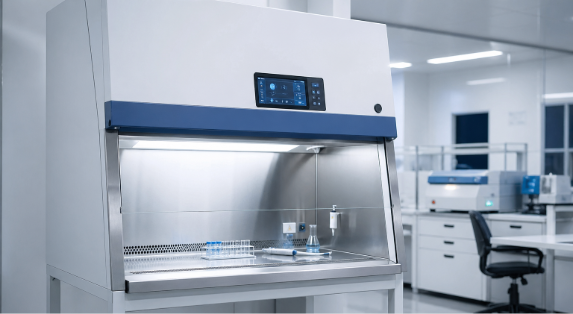
Smart control panels with touchscreen interfaces provide real-time data on airflow conditions, filter status, and system performance. These interfaces are designed to be user-friendly, allowing operators to make quick adjustments and respond to alerts efficiently. Ziebaq has introduced advanced control systems that integrate with cloud-based platforms, enabling remote monitoring and centralized management of multiple cabinets. This is particularly beneficial for large laboratories and research facilities.
Additionally, predictive maintenance features use data analytics to identify potential issues before they become critical, minimizing downtime and maintenance costs. The integration of IoT technology further enhances connectivity, allowing seamless communication between the cabinet and other laboratory systems. As laboratories continue to adopt digital transformation, intelligent airflow and smart controls are becoming essential features in any high-performance biological safety cabinet.
Ergonomics, Compliance, and Sustainability: Designing for the Future
In addition to performance and technology, modern laboratories are placing greater emphasis on ergonomics, compliance, and sustainability when selecting a Laboratory Biosafety Cabinet. Ergonomic design features such as adjustable work surfaces, comfortable armrests, and reduced noise levels are essential for improving user comfort and productivity.
Long hours in the lab can lead to fatigue, which increases the risk of errors; therefore, a well-designed biosafety cabinet can significantly enhance operational efficiency. Compliance with international standards such as NSF/ANSI 49 and EN 12469 is another critical consideration. These standards ensure that the cabinet meets stringent safety and performance requirements, making it suitable for regulated environments. Ziebaq cabinets are designed with compliance in mind, offering built-in validation tools and documentation support to simplify audits and certifications. Sustainability has also become a key focus in 2026, with laboratories seeking energy-efficient solutions that reduce their environmental impact.
Features such as EC motors, LED lighting, and low-energy operation modes help minimize power consumption without compromising performance. Additionally, modern cabinets are designed with durable materials that extend their lifespan, reducing waste and long-term costs. By combining ergonomic design, regulatory compliance, and sustainable technology, today’s biological safety cabinets are not only safer but also more efficient and environmentally responsible, making them a smart investment for forward-thinking laboratories.
UV Sterilization and Decontamination: Enhancing Laboratory Hygiene
Maintaining sterility inside a Laboratory Biosafety Cabinet is essential for preventing cross-contamination and ensuring the integrity of sensitive experiments. In 2026, UV sterilization and automated decontamination features have become standard in advanced biosafety cabinets, offering laboratories an additional layer of protection. Modern cabinets are equipped with UV-C lamps that effectively eliminate microorganisms on work surfaces and within the cabinet interior.
These systems are now more intelligent, with programmable sterilization cycles that can be scheduled during non-operational hours, ensuring consistent hygiene without disrupting workflow. Safety interlocks are also integrated to prevent accidental UV exposure, protecting users from harmful radiation. Ziebaq has incorporated automated decontamination protocols that reduce manual intervention and improve reliability. Additionally, some cabinets now feature chemical vapor decontamination compatibility, allowing for deep sterilization when handling highly hazardous agents.
These innovations not only improve safety but also reduce turnaround time between experiments. For laboratories dealing with infectious materials, having a biological safety cabinet with robust sterilization capabilities is crucial. It ensures compliance with stringent hygiene standards while maintaining a contamination-free environment. As research becomes more complex and sensitive, the role of advanced sterilization features in a Laboratory Biosafety Cabinet continues to grow, making it a key consideration during the selection process.
Data Logging, Connectivity, and Safety Alerts: Smart Lab Integration
In the era of digital laboratories, connectivity and data management have become indispensable features of a Laboratory Biosafety Cabinet. Modern biosafety cabinets are now equipped with advanced data logging systems that record critical parameters such as airflow velocity, filter status, and operational history. This data is essential for compliance, audits, and performance tracking. With built-in USB ports and cloud integration, users can easily export and analyze data, ensuring transparency and traceability.
Ziebaq has embraced this trend by offering cabinets with IoT-enabled connectivity, allowing real-time monitoring and control through centralized dashboards. This is particularly beneficial for large-scale laboratories managing multiple units across different locations. In addition to data logging, enhanced safety alert systems have become a defining feature of next-generation cabinets. These systems provide multi-level alerts, including visual and audible warnings for issues such as airflow disruption, improper sash positioning, or filter failure.
Predictive maintenance alerts further enhance reliability by notifying users of potential problems before they escalate. Integration with Laboratory Information Management Systems (LIMS) is another significant advancement, enabling seamless data flow between equipment and lab software. By combining connectivity, data intelligence, and proactive safety measures, modern biological safety cabinets are transforming into smart systems that not only protect but also optimize laboratory operations.
Modular Design and Space Efficiency: Adapting to Modern Lab Needs
Laboratories in 2026 are increasingly focused on optimizing space and flexibility, making modular design a critical feature of any Laboratory Biosafety Cabinet. Unlike traditional cabinets, modern biosafety cabinets are designed with adaptability in mind, allowing laboratories to customize configurations based on their specific requirements. Modular designs enable the addition of accessories such as gas taps, electrical outlets, and specialized work surfaces, enhancing functionality without the need for major modifications.
Ziebaq offers customizable solutions that cater to diverse applications, from academic research labs to pharmaceutical production facilities. Space efficiency is another important consideration, especially in urban laboratories where space is limited. Compact cabinet designs with optimized internal work areas allow laboratories to maximize productivity without compromising performance. Additionally, lightweight and mobile designs make installation and relocation easier, providing greater operational flexibility.
Some advanced cabinets also feature stackable or integrated systems that can be combined with other laboratory equipment, further improving space utilization. These innovations ensure that a biological safety cabinet can adapt to evolving laboratory needs, supporting both current and future workflows. By prioritizing modularity and space efficiency, laboratories can achieve a more organized and efficient working environment while maintaining the highest standards of safety and performance.
Conclusion: Investing in the Right Laboratory Biosafety Cabinet for the Future
Choosing the right Laboratory Biosafety Cabinet in 2026 is a strategic decision that goes far beyond basic functionality. With advancements in filtration, airflow management, smart controls, sterilization, and connectivity, modern biosafety cabinets have become sophisticated systems designed to meet the evolving demands of scientific research. Laboratories must carefully evaluate features such as advanced HEPA filtration, intelligent airflow systems, ergonomic design, compliance with global standards, and energy efficiency to ensure optimal performance and safety.
Additionally, innovations like UV sterilization, data logging, IoT connectivity, and modular design are redefining how laboratories operate, making it essential to invest in forward-thinking solutions. Ziebaq stands out as a brand that aligns with these modern requirements, offering cabinets that combine reliability, innovation, and user-centric design. By selecting a high-quality biological safety cabinet, laboratories can enhance productivity, ensure regulatory compliance, and protect both personnel and research outcomes. As the scientific landscape continues to evolve, investing in a future-ready cabinet is not just a necessity—it is a commitment to excellence, safety, and sustainability.