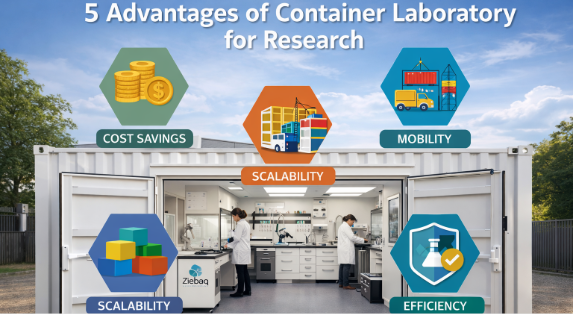
In the modern research ecosystem, flexibility, speed, and efficiency are no longer optional—they are essential. Container laboratories have emerged as a transformative solution, offering a perfect blend of mobility, scalability, and performance. Built with advanced Laboratory Furniture & Solutions, these modular labs are redefining how research facilities are designed and utilized. Industry leaders like Ziebaq are at the forefront, delivering high-quality container labs tailored to diverse scientific needs. Below is a detailed exploration of the five key advantages, with each section offering in-depth insights.
1. Rapid Deployment and Mobility
Faster Setup with Minimal Disruption
One of the most compelling advantages of a container laboratory is its ability to be deployed quickly. Traditional laboratories require extensive planning, civil construction, regulatory approvals, and long timelines, often delaying critical research activities. In contrast, container laboratories are prefabricated units that can be manufactured off-site and delivered ready for installation. This drastically reduces setup time, allowing organizations to become operational within a few weeks rather than months.
Mobility is another defining feature. These labs can be transported to remote locations, disaster zones, or temporary research sites without compromising functionality. This is particularly beneficial for environmental studies, field research, and industries that require on-site testing facilities. The modular nature ensures that the laboratory can be relocated or reconfigured as needed, making it a long-term, flexible investment.
Advanced Laboratory Furniture & Solutions play a crucial role in ensuring that mobility does not affect efficiency. Ziebaq integrates ergonomic workstations, secure storage units, and durable materials that remain intact during transportation. The internal layout is optimized to maintain workflow continuity, even in compact spaces. Additionally, pre-installed electrical, plumbing, and ventilation systems ensure immediate usability upon installation.
This combination of speed, flexibility, and operational readiness makes container laboratories an ideal solution for organizations that need to respond quickly to evolving research demands while maintaining high standards of performance and safety.
2. Cost-Effective Infrastructure
Maximizing Value Without Compromising Quality
Cost is a critical factor when establishing a research facility, and container laboratories offer a significant financial advantage over traditional setups. Constructing a conventional laboratory involves expenses related to land acquisition, architectural design, construction materials, labor, and ongoing maintenance. These costs can quickly escalate, especially for specialized research environments that require strict compliance and high-end infrastructure.
Container laboratories, on the other hand, provide a cost-efficient alternative by utilizing prefabricated structures. Since much of the construction is completed off-site, labor and material costs are significantly reduced. The modular design also allows organizations to invest incrementally, expanding the facility as their research needs grow rather than committing to a large upfront expenditure.
Another major cost-saving aspect is reduced maintenance. Container labs are built with durable materials designed to withstand harsh conditions, minimizing repair and upkeep expenses over time. Energy efficiency is also enhanced through optimized insulation and smart design, leading to lower utility bills.
The integration of modern laboratory furniture solutions further enhances cost efficiency. Ziebaq ensures that every inch of space is utilized effectively, reducing the need for additional infrastructure. From compact storage systems to multi-functional workstations, these solutions eliminate redundancy and improve productivity.
In essence, container laboratories enable organizations to achieve high-performance research capabilities without the financial burden associated with traditional construction. This makes them an attractive option for startups, educational institutions, and established enterprises alike.
3. Customization and Scalability
Tailored Solutions for Diverse Research Needs
Every research project comes with its own set of requirements, and a one-size-fits-all approach rarely works in scientific environments. Container laboratories excel in providing customization options that cater to specific operational needs. Whether it’s a chemical lab, microbiology unit, or quality testing facility, these modular structures can be designed to meet precise specifications.
Customization begins with the layout. The internal configuration can be adjusted to accommodate different workflows, ensuring smooth movement and efficient use of space. Specialized zones can be created for sample preparation, analysis, storage, and waste management. Equipment integration is also seamless, allowing researchers to install advanced instruments without compromising functionality.
Scalability is another major advantage. As research demands increase, additional container units can be added to expand the facility. This modular expansion is both cost-effective and time-efficient, eliminating the need for major structural changes. Organizations can start with a single unit and gradually build a comprehensive research complex.
High-quality Laboratory Furniture & Solutions are essential in achieving this level of customization. Ziebaq offers tailored furniture designs that align with specific laboratory functions, ensuring optimal performance and user comfort. From adjustable benches to chemical-resistant cabinets, every component is designed to enhance efficiency and safety.
This adaptability makes container laboratories a future-ready solution, capable of evolving alongside the organization’s research goals. It empowers researchers to focus on innovation rather than infrastructure limitations.
4. Enhanced Safety and Compliance
Meeting Industry Standards with Confidence
Safety is a cornerstone of any laboratory environment, and container laboratories are designed to meet stringent safety and compliance standards. Unlike traditional setups where retrofitting safety features can be challenging, container labs are built with these considerations from the ground up.
One of the key safety features is the use of fire-resistant and durable construction materials. These materials not only enhance structural integrity but also reduce the risk of accidents. Proper ventilation systems, including fume hoods and exhaust units, are integrated to ensure the safe handling of hazardous substances. This is particularly important in chemical and biological research where exposure to harmful agents must be minimized.
Compliance with regulatory standards is also easier to achieve. Container laboratories can be designed to meet local and international guidelines, ensuring that research activities are conducted within legal and ethical frameworks. This reduces the risk of penalties and enhances the credibility of the organization.
The role of laboratory furniture solutions in safety cannot be overlooked. Ziebaq incorporates chemical-resistant surfaces, secure storage systems, and ergonomic designs that reduce the likelihood of accidents. Proper labeling, organized layouts, and easy accessibility further contribute to a safe working environment.
In addition, container labs can be equipped with advanced monitoring systems, emergency exits, and fire suppression mechanisms. These features provide an added layer of protection, ensuring that both personnel and equipment are safeguarded at all times.
5. Sustainability and Eco-Friendliness
Building a Greener Future for Research
Sustainability has become a key consideration in modern infrastructure development, and container laboratories align perfectly with this objective. By repurposing shipping containers, these labs contribute to reducing industrial waste and promoting resource efficiency. This approach not only minimizes environmental impact but also supports the principles of a circular economy.
Energy efficiency is another significant advantage. Container laboratories can be designed with advanced insulation, energy-saving lighting, and efficient HVAC systems that reduce power consumption. This not only lowers operational costs but also decreases the overall carbon footprint of the facility.
The compact design of container labs further enhances sustainability. By optimizing space utilization, less land is required for construction, preserving natural ecosystems. Additionally, the modular nature allows for easy relocation, reducing the need for new construction and associated environmental disruption.
Incorporating eco-friendly Laboratory Furniture & Solutions adds another layer of sustainability. Ziebaq focuses on using durable, recyclable materials that extend the lifespan of laboratory components. This reduces waste generation and ensures long-term usability.
Moreover, container laboratories can be integrated with renewable energy sources such as solar panels, making them even more environmentally friendly. Water-saving fixtures and waste management systems further enhance their green credentials.
By choosing container laboratories, organizations not only benefit from operational efficiency but also contribute to environmental conservation. This makes them an ideal choice for forward-thinking institutions committed to sustainable development.
Conclusion
Container laboratories represent a paradigm shift in research infrastructure, offering unmatched advantages in speed, cost, flexibility, safety, and sustainability. With the integration of advanced Laboratory Furniture & Solutions and the expertise of brands like Ziebaq, these modular labs provide a comprehensive solution for modern research challenges.
As the demand for agile and efficient research environments continues to grow, container laboratories stand out as a smart, future-ready investment that empowers innovation while maintaining operational excellence.