
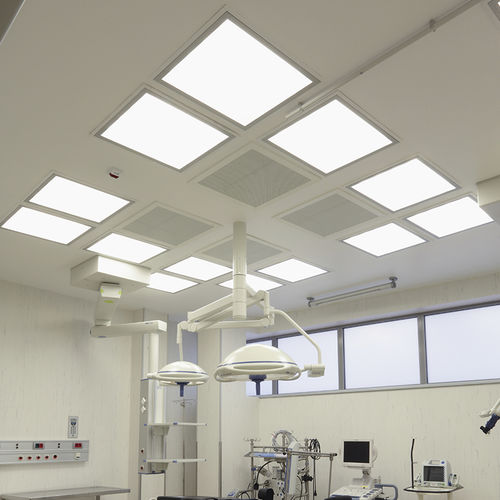
Cleanrooms with an ISO Class 5 (Class 100) or above rating may have sufficient free area in the ceiling to accommodate 234 or 232 recessed fixtures.
Recessed fixtures may also be combined with HEPA air filters when a space needs both a filter and a light. This fixture is typically used in small, pre-manufactured cleanrooms.

The fixtures are recessed with open tops and with an acrylic louver in lieu of the lens to serve as both a lighting fixture and an air delivery module. They are used in the most restrictive class of cleanrooms, where the entire ceiling area must be covered with air supply modules
Recessed fixtures are usually supported by the ceiling grid and sit on a gasket flange or within a gel-filled channel to maintain an airtight seal.
Total and reliable seals are required for recessed fixture housings regardless of cleanroom classification.
Even a microscopic opening in the housing will permit the entry of the particles from the air supply above the ceiling grid to enter the cleanroom during fixture maintenance.

Regulatory Compliance


Pharmaceutical Industries: These lights help maintain sterile conditions, crucial for drug manufacturing and research.
Semiconductor Industries: They provide precise lighting while minimizing contamination risks in the production of microelectronics.
Hospitals and Healthcare Facilities: Used in operating rooms and laboratories to ensure a clean and safe environment.
Food Production Facilities: Help maintain hygiene standards in areas where food is processed and packaged.
Clean Production Areas: Essential in industries where even small particles can affect the quality of the product, such as aerospace and optics