Cleanroom technology has evolved into one of the most critical pillars of modern industrial infrastructure. What once began as simple filtered-air environments has now transformed into highly engineered, data-driven ecosystems that support semiconductor fabrication, pharmaceuticals, biotechnology, aerospace engineering, and advanced manufacturing. Today, Clean Rooms Solutions are not just technical installations but strategic assets that directly impact product quality, regulatory compliance, and operational efficiency. Companies such as Ziebaq are actively contributing to this evolution by delivering integrated cleanroom systems tailored to industry-specific requirements.
1. Early Foundations of Cleanroom Technology
The earliest cleanroom systems emerged in the mid-20th century, primarily driven by aerospace, defense, and nuclear research industries. At that time, contamination control was still a developing discipline, and the primary goal was simply to reduce airborne particulates that could interfere with sensitive processes. These early Clean Rooms Solutions relied heavily on HEPA filtration systems, controlled air exchanges, and positive pressure environments to limit contamination from external sources.
However, these systems were largely manual and lacked precision monitoring. Engineers focused on airflow direction and filtration efficiency rather than comprehensive environmental control. Materials used in construction were basic but non-shedding, and the concept of real-time contamination tracking did not yet exist. Despite these limitations, this phase established the foundational principles of cleanroom engineering—air purity, pressure differential, and controlled access. These principles remain central even in modern cleanroom design, although they have been significantly enhanced with advanced technology.
2. Transition to Precision-Driven Cleanroom Systems
The evolution of microelectronics and semiconductor manufacturing in the 1970s and 1980s marked a turning point in cleanroom technology. As device sizes shrank and circuit density increased, even microscopic particles became a critical threat to production yield. This pushed Clean Rooms Solutions toward higher levels of precision engineering and environmental control.
During this phase, HEPA filters were supplemented with ULPA filtration systems capable of capturing ultra-fine particles. Laminar airflow systems were optimized using computational design models to ensure unidirectional airflow in critical zones. Additionally, construction materials evolved significantly—epoxy flooring, stainless steel surfaces, and anti-static materials became standard to minimize particle generation.
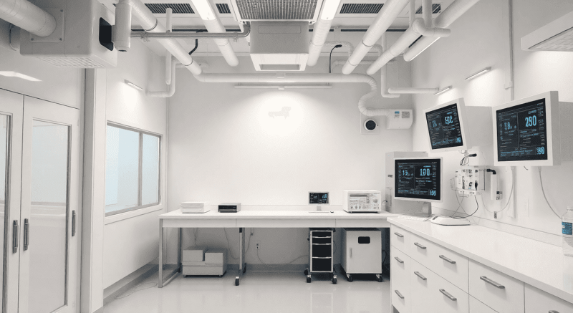
Environmental monitoring systems also began to emerge, introducing sensors capable of tracking temperature, humidity, pressure differentials, and particulate concentration. Although still limited compared to modern systems, these advancements marked the beginning of data-driven contamination control. Companies like Ziebaq played a role in implementing such upgraded cleanroom infrastructures across industries requiring high precision.
3. Modern Cleanroom Ecosystems and Smart Integration
Modern cleanroom environments represent a convergence of engineering precision, automation, and digital intelligence. Today’s Clean Rooms Solutions are designed not only for contamination control but also for operational efficiency, sustainability, and regulatory compliance. Cleanrooms are now integrated with building management systems (BMS), allowing centralized control of airflow, pressure, temperature, and energy consumption.
One of the most significant advancements is the integration of IoT-enabled sensors that provide continuous real-time monitoring of environmental parameters. These systems allow predictive maintenance and immediate response to contamination risks. Artificial intelligence further enhances cleanroom performance by analyzing airflow patterns, detecting anomalies, and optimizing HVAC operations to reduce energy usage.
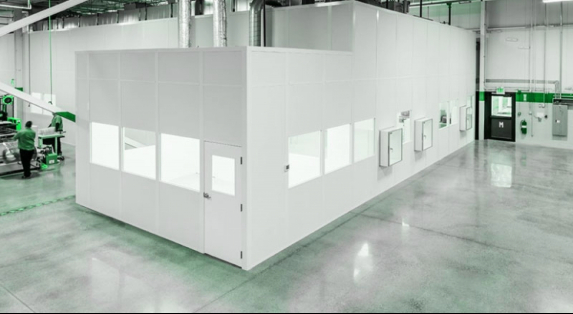
Modular cleanroom construction has also gained popularity, enabling industries to scale operations quickly without major structural modifications. This flexibility is especially important in pharmaceutical manufacturing and biotech research, where production requirements frequently change. Modern providers such as Ziebaq design these modular and intelligent systems to meet stringent ISO, GMP, and FDA compliance standards, ensuring both safety and efficiency.
4. Industry Applications Driving Cleanroom Innovation
The demand for advanced Clean Rooms Solutions has expanded across multiple industries, each with unique contamination control requirements. In semiconductor manufacturing, cleanrooms are essential for producing microchips with nanometer-level precision. Even a single particle can lead to circuit failure, making ultra-clean environments indispensable.
In the pharmaceutical and biotechnology sectors, cleanrooms ensure sterile conditions for drug formulation, vaccine production, and laboratory research. These environments must comply with strict regulatory standards to ensure patient safety and product integrity. Similarly, medical device manufacturing requires controlled environments to prevent contamination in surgical tools, implants, and diagnostic equipment.
The aerospace and defense industries rely on cleanrooms for spacecraft assembly and sensitive instrumentation, where contamination could compromise mission success. Even the food and beverage industry uses cleanroom technology for high-risk packaging and sterile processing environments. Across all these sectors, Clean Rooms Solutions continue to evolve to meet increasingly complex operational and regulatory demands.
5. Future Trends and the Next Generation of Cleanrooms
The future of cleanroom technology is being shaped by automation, sustainability, and digital transformation. Fully autonomous cleanrooms are expected to emerge, where robotics handle material movement, cleaning, and monitoring with minimal human intervention. This will significantly reduce contamination risks associated with human presence.
Sustainability is also becoming a major focus, with energy-efficient HVAC systems, recyclable construction materials, and optimized airflow designs reducing the environmental footprint of cleanrooms. Digital twin technology is another emerging trend, allowing engineers to create virtual replicas of cleanroom environments for simulation, optimization, and predictive analysis.
As nanotechnology and advanced manufacturing continue to evolve, cleanroom standards will become even more stringent. The role of solution providers such as Ziebaq will be crucial in developing next-generation Clean Rooms Solutions that combine intelligence, efficiency, and adaptability.
Ultimately, cleanroom technology will continue to move toward fully integrated, self-regulating ecosystems that support the most advanced scientific and industrial innovations of the future.