Introduction: A New Era in Laboratory Furniture & Solutions
The modern laboratory is evolving at an unprecedented pace. Scientific innovation, regulatory complexity, and technological integration are reshaping how research environments are designed and operated. In this rapidly shifting landscape, traditional fixed casework is increasingly unable to meet operational demands. This shift has accelerated the rise of reconfigurable lab workstations—an innovation that is redefining Laboratory Furniture & Solutions across industries. Unlike conventional installations that are rigid and permanent, reconfigurable systems are modular, scalable, and adaptable to changing research requirements.
Laboratories today must accommodate new instruments, updated compliance standards, interdisciplinary research models, and evolving workflow patterns. Infrastructure that cannot evolve becomes a liability. Reconfigurable workstations provide a forward-thinking solution by enabling laboratories to modify layouts without structural demolition. This approach reduces downtime, enhances efficiency, and protects capital investment over time. Whether in pharmaceutical manufacturing, biotechnology research, clinical diagnostics, educational institutions, or industrial quality control facilities, flexibility has become a strategic necessity rather than a design preference.
Brands like Ziebaq are contributing to this transformation by engineering intelligent, modular Laboratory Furniture & Solutions that align with global laboratory standards and operational expectations. The rise of adaptable workstations reflects a deeper shift in mindset—from building static laboratories to designing responsive research ecosystems. As innovation cycles shorten and research complexity increases, laboratories must prioritize infrastructure that supports continuous evolution. Reconfigurable lab workstations are no longer an optional upgrade; they represent the foundation of future-ready laboratory design.
Limitations of Traditional Fixed Laboratory Furniture
For decades, laboratories were constructed using fixed cabinetry and permanently installed benches designed for long-term stability. While durable, these traditional systems present significant constraints in today’s dynamic research environment. Fixed laboratory furniture lacks flexibility, making modifications expensive, time-consuming, and operationally disruptive. When workflow processes change or new equipment is introduced, facilities often face costly renovations that involve dismantling infrastructure, halting research activities, and reallocating budgets.
In regulated industries, such modifications may also require revalidation procedures, increasing compliance burdens. Traditional casework is typically anchored to walls and floors, restricting layout optimization and limiting the ability to adapt to collaborative research models. As interdisciplinary projects become more common, laboratories must reconfigure spaces quickly to accommodate different teams and experimental protocols. Fixed systems struggle to support such transitions efficiently. Moreover, legacy Laboratory Furniture & Solutions were not designed with modern technology integration in mind.
Today’s laboratories require embedded data ports, adaptable power supplies, gas distribution systems, and digital monitoring capabilities. Retrofitting traditional setups to incorporate these features often results in inefficient workarounds and increased safety risks. Over time, rigid infrastructure can hinder productivity, employee ergonomics, and overall laboratory performance. The long lifecycle once considered an advantage now becomes a drawback when adaptability is essential.
This structural inflexibility is one of the primary drivers behind the industry-wide shift toward modular and reconfigurable workstations. Laboratories are recognizing that future resilience depends on furniture systems that evolve alongside scientific progress rather than resisting it.
Core Features of Reconfigurable Lab Workstations
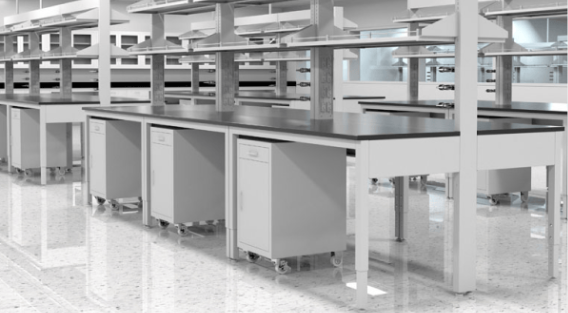
Reconfigurable lab workstations are engineered around modular architecture that prioritizes adaptability, durability, and precision integration. At the structural level, these systems use robust steel or aluminum frames that serve as a stable backbone while allowing interchangeable components. Work surfaces can be selected and replaced according to application requirements, including epoxy resin for chemical resistance, phenolic resin for durability, stainless steel for sterile environments, or specialized laminates for educational settings.
Adjustable height mechanisms—both manual and motorized—enhance ergonomic performance, enabling technicians to alternate between sitting and standing positions. This design significantly reduces fatigue and musculoskeletal strain during extended laboratory procedures. Mobile storage units mounted on casters provide flexibility in spatial organization, allowing cabinets and drawers to be repositioned without structural changes. Overhead service carriers and utility spines integrate gas lines, electrical outlets, data ports, and ventilation systems in centralized distribution channels.
This eliminates dependency on fixed wall connections and supports rapid reconfiguration. Additionally, modular shelving systems and accessory rails allow laboratories to expand vertically without expanding floor space. High-quality Laboratory Furniture & Solutions also incorporate vibration control, chemical resistance, and load-bearing optimization to ensure performance stability in demanding research conditions.
Ziebaq, for example, emphasizes precision engineering in modular systems to balance flexibility with structural integrity. These integrated design features collectively create a workspace that can adapt to new workflows, technologies, and research priorities without compromising safety or compliance. Reconfigurable workstations represent a holistic upgrade rather than a superficial design modification.
Operational, Financial, and Sustainability Advantages
The transition to reconfigurable Laboratory Furniture & Solutions offers measurable operational and financial benefits over the long term. From an operational perspective, flexibility directly enhances productivity. Laboratories can reorganize layouts to optimize workflow patterns, minimize sample transit time, and improve collaboration between research teams. Reduced downtime during layout changes ensures continuity of research activities, which is critical in pharmaceutical and biotech environments where delays can impact development timelines. Financially, modular systems reduce lifecycle costs by eliminating repeated demolition and reconstruction expenses.
Components can be reused, repurposed, or expanded as laboratory needs evolve, preserving capital investment. Over a 10 to 15-year horizon, the cumulative savings from reduced renovation, minimized downtime, and extended asset usability significantly outweigh the initial investment. Sustainability is another major advantage. Reconfigurable systems reduce material waste associated with traditional renovations, supporting environmentally responsible laboratory design. Instead of discarding entire installations, facilities can retain core structural frames and modify only necessary components.
This aligns with global sustainability initiatives and green building standards. Additionally, ergonomic enhancements improve employee well-being, reducing absenteeism and increasing workforce retention. Brands like Ziebaq incorporate durable materials and scalable engineering to maximize long-term performance and environmental responsibility. By combining operational agility, financial efficiency, and ecological sustainability, reconfigurable lab workstations redefine the strategic value of modern Laboratory Furniture & Solutions. Laboratories investing in modular infrastructure position themselves not only for current demands but also for future scientific and technological advancements.
The Future of Laboratory Furniture & Solutions
The future of laboratory design is centered on adaptability, smart integration, and resilient infrastructure. As research methodologies become increasingly interdisciplinary and technology-driven, laboratories must support rapid change without compromising compliance or safety. Reconfigurable lab workstations will play a foundational role in shaping next-generation Laboratory Furniture & Solutions.
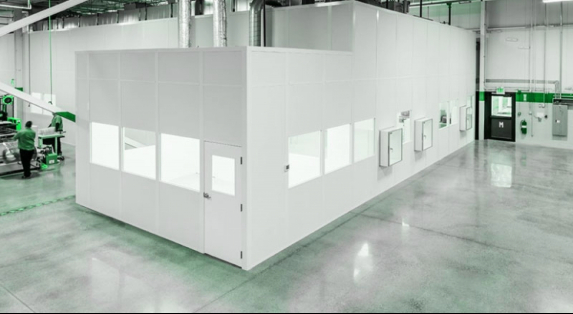
Emerging trends include integration with IoT-enabled monitoring systems, automated utility management, and data-driven space optimization. Laboratories are evolving into intelligent ecosystems where physical infrastructure communicates with digital systems to enhance efficiency and safety oversight. Modular workstations provide the structural flexibility required to incorporate these innovations seamlessly. Furthermore, cleanroom environments, diagnostic facilities, and high-containment laboratories are adopting adaptable furniture to maintain regulatory alignment while accommodating technological upgrades.
Ziebaq and other forward-looking brands are advancing engineering precision to ensure modular systems meet international safety standards and performance benchmarks. The emphasis is shifting from static construction to scalable design thinking. Laboratories must be prepared for unpredictable research pivots, funding shifts, and scientific breakthroughs. Infrastructure that can expand, contract, or reorganize without structural reconstruction becomes a strategic asset.
The rise of reconfigurable workstations reflects a broader transformation in how laboratories are conceptualized—not as fixed spaces, but as dynamic environments capable of continuous evolution. As global research intensity accelerates, adaptable Laboratory Furniture & Solutions will become the industry standard rather than the exception.
Applications Across Pharmaceutical and Biotechnology Laboratories
Pharmaceutical and biotechnology laboratories operate in environments defined by rapid innovation, regulatory rigor, and high capital intensity. In such settings, infrastructure must support continuous evolution in research protocols, analytical methodologies, and production workflows. Reconfigurable lab workstations provide a strategic advantage by enabling pharmaceutical and biotech facilities to adjust layouts without structural demolition.
Drug discovery programs frequently pivot based on trial outcomes, requiring laboratory spaces to transition from formulation studies to stability testing or from cell culture to molecular diagnostics. Traditional fixed casework often restricts such transitions, leading to costly renovations and operational downtime. In contrast, modular Laboratory Furniture & Solutions allow teams to reorganize bench configurations, integrate new instrumentation, and re-route utilities efficiently.
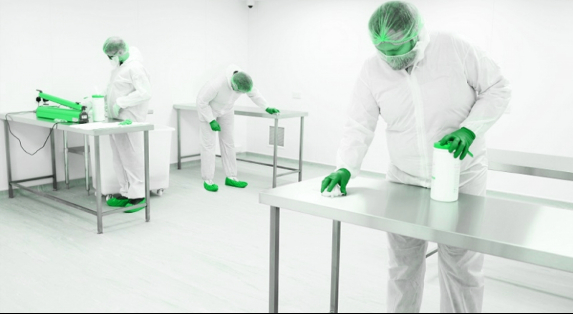
Cleanroom compatibility is another critical requirement in pharmaceutical settings. Reconfigurable systems can be engineered with smooth, non-porous materials and sealed joints that comply with GMP and ISO standards. Utility spines enable centralized management of gas lines, electrical outlets, and data connections while maintaining sterility protocols. Ergonomic adaptability also enhances workforce productivity, particularly in high-throughput laboratories where repetitive tasks are common. By incorporating scalable storage, adjustable-height benches, and flexible zoning, laboratories can optimize both safety and efficiency.
Ziebaq’s approach to modular Laboratory Furniture & Solutions supports this sector by combining structural precision with compliance-focused engineering. As biologics, personalized medicine, and advanced therapeutics continue to expand, laboratory infrastructure must remain responsive. Reconfigurable workstations ensure that pharmaceutical and biotechnology facilities can evolve without sacrificing compliance, productivity, or operational continuity, making adaptability a cornerstone of scientific advancement.
Applications in Educational, Diagnostic, and Research Institutions
Educational institutions, diagnostic laboratories, and multidisciplinary research centers face unique operational challenges that make adaptability essential. Universities often require laboratories that can transition between chemistry, biology, physics, and engineering applications within the same academic year. Reconfigurable lab workstations enable faculty to modify layouts to accommodate different class sizes, research projects, and equipment requirements without permanent structural changes. This flexibility enhances space utilization and reduces capital expenditure over time.
Diagnostic laboratories, particularly those handling fluctuating patient volumes, benefit from modular Laboratory Furniture & Solutions that allow rapid expansion or reorganization. During periods of increased testing demand, such as public health emergencies, laboratories must integrate additional analyzers and workstations quickly. Modular systems support these expansions without interrupting core operations. Research institutions engaged in interdisciplinary collaboration also require adaptable environments where teams can co-locate or separate as projects evolve.
Reconfigurable benches, mobile storage units, and integrated service carriers facilitate dynamic space planning while maintaining safety compliance. Furthermore, adjustable-height systems contribute to improved ergonomics for students, technicians, and researchers working extended hours. Ziebaq supports these sectors by delivering durable, modular solutions that align with diverse academic and clinical requirements.
By investing in adaptable Laboratory Furniture & Solutions, institutions enhance their capacity to respond to academic growth, technological advancement, and shifting research priorities. Flexibility becomes not merely a design enhancement but a structural strategy that strengthens institutional resilience and operational efficiency.
Risk Mitigation, Compliance, and Safety Integration
Laboratories operating in regulated industries must prioritize compliance, safety, and risk management. Reconfigurable lab workstations significantly enhance these objectives by enabling controlled modifications without structural disruption. Regulatory frameworks such as GMP, GLP, ISO standards, and biosafety protocols require laboratories to maintain validated environments. When infrastructure changes are necessary, traditional fixed systems often require extensive revalidation processes.
Modular Laboratory Furniture & Solutions minimize this burden by allowing selective adjustments rather than comprehensive reconstruction. Service carriers centralize utilities, reducing exposed wiring or piping and enhancing hazard control. Zoning can be modified to separate wet and dry operations, reducing cross-contamination risks. Adjustable components also support ergonomic safety, lowering the incidence of workplace injuries related to repetitive strain or improper posture.
Fire-resistant materials, chemical-resistant surfaces, and corrosion-proof structural frames further strengthen laboratory safety profiles. In high-containment facilities, modular systems can be designed to align with cleanroom classifications and airflow management requirements. Ziebaq emphasizes compliance-driven engineering to ensure that flexibility does not compromise regulatory alignment.
The ability to adapt laboratory layouts quickly also supports emergency preparedness, allowing facilities to reorganize workflows in response to new safety mandates or operational risks. Ultimately, reconfigurable workstations contribute to a proactive risk mitigation strategy, integrating safety considerations directly into the structural framework of modern Laboratory Furniture & Solutions.
Long-Term ROI and Strategic Infrastructure Planning
From a strategic planning perspective, reconfigurable lab workstations represent a long-term investment in resilience and operational continuity. Laboratories are capital-intensive environments, and infrastructure decisions often have multi-decade implications. While modular Laboratory Furniture & Solutions may involve a higher initial cost compared to traditional fixed casework, their lifecycle value is substantially greater.
The primary financial advantage lies in reduced renovation frequency. Instead of demolishing and rebuilding spaces to accommodate new technologies or workflows, laboratories can modify existing modular systems. This approach minimizes downtime, preserves productivity, and protects research timelines. Over a 10–15 year horizon, the cumulative savings from avoided reconstruction and operational interruption can be significant. Additionally, reconfigurable systems enhance asset longevity by allowing components to be repurposed or expanded as needs evolve.
Strategic infrastructure planning also considers workforce efficiency. Ergonomic adaptability improves employee satisfaction and reduces injury-related costs. Sustainability further strengthens ROI by minimizing material waste and supporting environmentally responsible operations. Ziebaq’s modular engineering philosophy reflects this long-term planning approach, ensuring that Laboratory Furniture & Solutions remain scalable and durable. In an era defined by rapid technological change, laboratories must anticipate future requirements rather than merely respond to present demands.
Reconfigurable workstations provide the structural flexibility necessary for long-term growth, regulatory adaptation, and scientific innovation. As research complexity increases globally, modular infrastructure will continue to emerge as the economically and operationally superior strategy for forward-thinking laboratory environments.
Technology Integration and Smart Laboratory Infrastructure
The evolution of laboratory environments is increasingly tied to digital transformation, automation, and data-driven operations. Modern research facilities rely heavily on interconnected instruments, cloud-based data systems, environmental monitoring sensors, and automated workflows. Reconfigurable lab workstations are uniquely positioned to support this technological integration by providing adaptable infrastructure that accommodates continuous upgrades. Traditional fixed Laboratory Furniture & Solutions were not designed with digital scalability in mind, often requiring complex retrofitting to integrate additional power outlets, data ports, or network expansions.
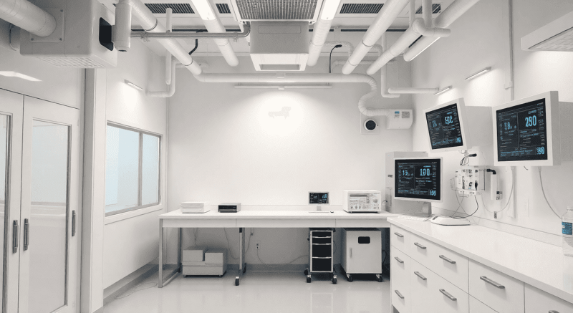
In contrast, modular systems incorporate centralized utility spines and service carriers that streamline distribution of electricity, gas, compressed air, and structured cabling. This design allows laboratories to introduce new analytical instruments, robotic systems, or IoT-enabled monitoring devices without major structural disruption. Smart laboratories increasingly use environmental sensors to monitor temperature, humidity, airflow, and chemical exposure in real time. Reconfigurable frameworks enable seamless placement and repositioning of these devices as operational requirements evolve. Furthermore, automated storage and high-throughput processing systems demand flexible spatial planning. Modular benches and mobile storage units can be repositioned to optimize workflow around robotic platforms.
Ziebaq integrates precision engineering within its Laboratory Furniture & Solutions to ensure compatibility with advanced technological ecosystems. As artificial intelligence and laboratory automation continue to reshape scientific research, infrastructure must remain adaptable. Reconfigurable workstations provide the structural agility necessary to support continuous digital evolution, transforming laboratories into intelligent, responsive environments capable of meeting the demands of next-generation scientific discovery.
Sustainability and Environmental Responsibility in Modern Laboratories
Sustainability has become a defining consideration in laboratory design and procurement. Research facilities consume significant energy and materials, making environmentally responsible infrastructure a strategic priority. Reconfigurable lab workstations contribute directly to sustainability by reducing material waste associated with renovation cycles. Traditional laboratory renovations often involve demolition of fixed cabinetry, resulting in discarded materials and increased environmental impact. Modular Laboratory Furniture & Solutions, however, allow core structural frames to remain intact while components are replaced or reconfigured as needed.
This significantly decreases landfill waste and conserves raw materials. Durable, corrosion-resistant materials extend product lifespan, reducing the frequency of replacement. Additionally, modular systems support optimized spatial layouts that enhance energy efficiency by improving airflow management and lighting distribution. Laboratories pursuing green building certifications benefit from adaptable systems that align with sustainable construction principles. Reusability and scalability are central to circular design strategies, ensuring that infrastructure evolves without excessive resource consumption.
Ziebaq emphasizes long-term durability and modular adaptability in its engineering approach, reinforcing environmental responsibility alongside operational performance. Sustainable Laboratory Furniture & Solutions are no longer limited to material selection; they encompass lifecycle management, energy optimization, and waste reduction. As regulatory bodies and funding institutions increasingly emphasize sustainability metrics, laboratories must demonstrate responsible infrastructure planning. Reconfigurable workstations provide a practical and measurable pathway toward achieving environmental goals while maintaining scientific productivity. The integration of sustainability into laboratory design reflects a broader commitment to balancing innovation with ecological stewardship.
The Strategic Role of Ziebaq in Advancing Reconfigurable Laboratory Furniture & Solutions
As the laboratory industry transitions toward adaptable infrastructure, manufacturers play a critical role in shaping standards and innovation. Ziebaq has positioned itself as a forward-focused contributor to the evolution of reconfigurable Laboratory Furniture & Solutions. The brand emphasizes precision-engineered modular frameworks that balance structural integrity with flexibility. This approach ensures that adaptability does not compromise load-bearing capacity, chemical resistance, or regulatory compliance.
Ziebaq’s systems are designed to integrate seamlessly with utility distribution networks, supporting gas lines, electrical supply, and data connectivity through centralized service modules. Such integration simplifies installation and facilitates future expansion. Ergonomic considerations are also central to Ziebaq’s engineering philosophy, with adjustable-height benches and adaptable storage configurations enhancing technician comfort and productivity. By focusing on scalability, Ziebaq enables laboratories to expand incrementally rather than undertaking large-scale renovations. This modular strategy aligns with long-term capital planning and risk mitigation objectives.
Furthermore, the brand’s commitment to durable materials and precision manufacturing supports sustainability goals and lifecycle cost optimization. In a competitive research environment where agility determines success, infrastructure must serve as an enabler rather than a constraint. Ziebaq’s contribution to modern Laboratory Furniture & Solutions reflects a broader industry shift toward responsive design and engineering excellence. As laboratories worldwide embrace modular workstations, manufacturers that prioritize innovation, compliance, and durability will define the next chapter in laboratory infrastructure development.
Conclusion: Reconfigurable Workstations as the Foundation of Future-Ready Laboratories
The rise of reconfigurable lab workstations marks a fundamental transformation in laboratory design philosophy. Modern research environments demand infrastructure that evolves alongside scientific advancement, regulatory complexity, and technological integration. Fixed and rigid systems no longer provide the adaptability required to support interdisciplinary collaboration, automation, or sustainability objectives. Reconfigurable Laboratory Furniture & Solutions offer a comprehensive response to these challenges by combining modular engineering, ergonomic adaptability, and long-term scalability.
Across pharmaceutical, biotechnology, educational, diagnostic, and industrial laboratories, flexible workstations enhance productivity, reduce lifecycle costs, and strengthen compliance readiness. They support digital integration, minimize environmental impact, and enable strategic infrastructure planning. Manufacturers such as Ziebaq are advancing this transformation by delivering precision-engineered modular systems that align with global laboratory standards. The shift toward adaptable workspaces reflects a broader recognition that laboratories are dynamic ecosystems rather than static environments.
As innovation cycles accelerate and research demands grow increasingly complex, infrastructure must remain resilient and responsive. Reconfigurable workstations provide the structural agility necessary to meet present requirements while preparing for future advancements. In the evolving landscape of Laboratory Furniture & Solutions, adaptability is no longer optional—it is foundational. Laboratories that embrace modular design today position themselves for sustained scientific excellence, operational efficiency, and long-term competitiveness in an increasingly demanding research environment.