Introduction: Why Safe Gas Cylinder Management Matters in Laboratories
Handling laboratory gas cylinders requires serious attention to safety, compliance, and procedural accuracy. Gas cylinders contain compressed gases at extremely high pressure, often exceeding 2,000 psi, which means even a minor handling error can lead to catastrophic outcomes. These risks include explosions, rapid pressure release, and chemical exposure, depending on the gas stored inside. Whether the gas is toxic, flammable, oxidizing, or inert, mishandling can pose serious hazards to personnel, infrastructure, and ongoing research.
In modern laboratory environments, gases play a central role in instrument operation, controlled reactions, sterilization, sample preparation, environmental simulation, and calibration. Because cylinders remain a primary supply method, strict safety practices are necessary regardless of whether the facility uses individual cylinders at benches or a more advanced Laboratory Gas Distribution System, such as a centralized manifold system or pipeline-based gas delivery network.
A centralized laboratory gas supply system significantly reduces cylinder movement, improves traceability, and minimizes exposure to hazardous gases — however, cylinders still need proper handling from transport to storage and connection. Regulations from safety authorities such as OSHA, NFPA, ISO, and country-specific laboratory compliance frameworks mandate safety protocols for gas storage, labeling, pressure regulation, cylinder securing, and ventilation.
Proper training, correct equipment, routine inspections, and structured storage rules are essential elements of safe laboratory cylinder management. Every user, from technicians to scientists and facility managers, should understand the inherent risks and follow protocols consistently. Laboratory gas safety culture is not optional — it protects people, preserves equipment investments, and ensures compliance with operational standards.
By following established safety procedures and incorporating engineered controls like leak detection, automated shutoff, and monitored Lab Gas Pipeline Systems, laboratories can operate more efficiently while reducing preventable incidents. The following sections provide detailed best practices for handling, storing, and managing laboratory gas cylinders responsibly.
Safe Handling Practices for Gas Cylinders in Laboratories
Safe handling starts long before a gas cylinder reaches its final location or is connected to instrumentation. When a cylinder arrives at the facility, personnel must inspect it before accepting delivery. This includes checking for dents, corrosion, broken valves, missing markings, or damaged safety caps. If there is any doubt, the cylinder should be refused or quarantined for evaluation. Unidentified cylinders should never be used, as guessing gas type or pressure level is extremely hazardous.
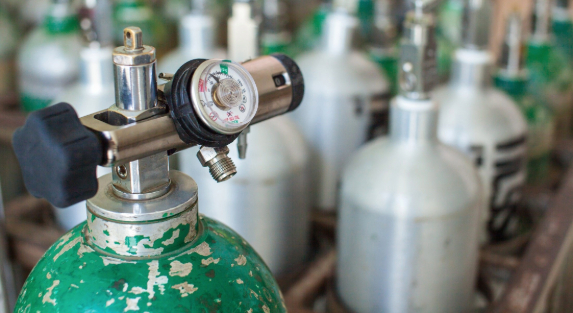
Transporting cylinders requires approved handling tools—not lifting by hand or rolling them across the floor. Gas cylinders must remain upright and secured with chains, clamps, trolley straps, or carrier cages. The valve protection cap must stay attached until the cylinder is positioned, secured, and ready for regulator installation. A falling or tipped cylinder can shear the valve, instantly turning it into a high-velocity projectile capable of penetrating walls or causing fatal injury.
Before connecting a cylinder to a regulator or a Lab Gas Delivery System, ensure the regulator is compatible with both gas type and pressure rating. Never use makeshift adapters, Teflon tape, or force connections. Proper torque application and manufacturer-approved fittings are part of safe regulator installation.
When opening a cylinder valve, always proceed slowly to prevent pressure shocks to regulators, pipelines, or instruments. Sudden surges may damage analytical instruments, particularly high-precision devices requiring ultra-clean gases, such as mass spectrometers, GC units, or ICP analyzers.
Personnel should be trained to recognize hazards, including gas leaks, pressure irregularities, regulator failures, and abnormal cylinder temperature. Flame arrestors, flashback preventors, pressure gauges, and color-coded tags further enhance safety.
When integrated with a Gas Pipeline Infrastructure for Laboratories, these handling practices reduce direct cylinder interaction—but proper training remains essential. Safe handling protects users, maintains research continuity, and prevents avoidable accidents.
Storage Requirements and Best Practices for Cylinder Safety
Proper storage is an integral part of gas cylinder safety. Cylinders must always be stored upright and securely fastened using clamps, chains, or wall-mounted racks to prevent tipping. Storage rooms must meet ventilation requirements, ensuring sufficient airflow to prevent the accumulation of leaking gases. Poor ventilation may lead to fire hazards, oxygen depletion, or toxic gas buildup.
Cylinders should never be stored near heat sources, ignition hazards, direct sunlight, or equipment generating sparks. Extreme temperature fluctuations can compromise cylinder integrity or increase internal pressure. Whenever possible, storage rooms should be temperature-controlled and equipped with gas detection systems.
Gas cylinders must also be segregated by category: flammable gases, oxidizers, toxic gases, corrosive gases, and inert gases should be stored separately. Specific spacing rules apply—for example, oxidizing gases must be stored at least 20 feet away from flammable gases unless there is a certified fire-rated partition. Empty cylinders must be clearly labeled and stored separately to avoid confusion.
Cylinder labeling must remain fully visible and intact. If a label becomes damaged or unreadable, the cylinder must be tagged as “Do Not Use—Unidentified Gas” until properly identified by the supplier. Using or attempting to analyze unknown cylinders is extremely dangerous.
Where laboratories use a centralized setup, cylinders are typically relocated to a secure manifold room connected to a Centralized Laboratory Gas Distribution System. This setup minimizes cylinder movement and limits exposure to hazardous gases in working areas. The system may include emergency shut-offs, pressure monitoring, and alarms that alert users of leaks or pressure fluctuations.
Fire extinguishing equipment suitable for gas type, such as CO₂ or dry chemical extinguishers, must be accessible near storage zones. In addition, smoking, open flames, and unauthorized access to gas storage areas should be strictly prohibited.
Proper storage isn’t just a regulation—it’s a fundamental safety requirement that protects personnel and infrastructure.
How Laboratory Gas Distribution Systems Improve Cylinder Safety
A modern Laboratory Gas Distribution System significantly improves safety by reducing direct interaction with high-pressure cylinders. Instead of placing cylinders in working environments, the system allows them to be centralized in a secure gas storage or manifold room. From there, gases are distributed via stainless steel pipelines, pressure regulators, and automated manifold systems to lab workstations.
This eliminates constant cylinder handling, reduces the likelihood of leaks near personnel, and improves environmental control. Centralized systems can include automatic changeovers, meaning gas supply switches from a primary cylinder to a backup without requiring manual intervention. This prevents workflow interruptions and avoids the need for frequent handling.
Another key safety advantage is controlled pressure regulation. Each stage—from cylinder valve to pipeline outlet—is governed by pressure-reducing components designed to prevent overpressure events. High-purity pipelines prevent contamination, protecting equipment such as chromatographs, spectrometers, and incubators that require stable gas purity.
Additionally, these systems can be enhanced with monitoring technologies including IoT-based leak detection, cloud-based pressure logging, occupancy sensors, and remote shutdown controls. In the event of abnormal pressure or a detected leak, automated safety features can isolate affected areas, alert facility managers, and prevent escalation.
A professionally installed Lab Gas Pipeline System ensures compliance with safety standards like NFPA, CGA, ISO, and local regulatory codes. It reinforces system traceability, documentation, and maintenance logs—critical elements for audits, certifications, and research facility accreditation.
By removing gas cylinders from direct working spaces and replacing them with controlled distribution networks, laboratories create safer, cleaner, and more efficient research environments. Not only does this protect personnel, but it also promotes operational reliability and research accuracy.
Emergency Response Guidelines for Gas Cylinder Incidents
Despite best practices, emergencies can still occur, often due to accidental leaks, equipment failures, improper handling, or environmental hazards. Every laboratory using gas cylinders or a Laboratory Gas Supply System must have a clear emergency response strategy in place.
In case of a gas leak, the highest priority is protecting personnel. Laboratory users must evacuate the immediate area and avoid activating electrical switches, flames, or friction-based tools that may ignite flammable gases. Once the space is safely evacuated, personnel trained in emergency response protocols may shut off gas valves using emergency controls installed in the gas distribution line.
Gas leak alarms and ventilation systems should activate automatically if installed. For toxic or corrosive gases, only trained personnel wearing proper PPE—such as respirators or self-contained breathing apparatus—should respond.
Fire incidents involving gas cylinders require caution. If a cylinder is exposed to fire or extreme heat, it may rupture. Fire safety personnel may apply cooling water fog or trigger isolation systems to prevent escalation. Hazmat or firefighting teams must be alerted immediately.
Emergency plans should also include:
- Updated MSDS documentation accessible in all work areas
- Clear signage for emergency exits and gas shut-off points
- Regular safety drills and refresher training
- Automatic leak detectors integrated with the Laboratory Gas Distribution Network
After an emergency, cylinders must be inspected before reuse. Equipment connected to pipelines must also undergo leak testing, purge cycles, and functional verification.
A strong safety culture supported by training, system monitoring, and preparedness ensures that laboratories can respond quickly and effectively during unexpected gas-related incidents.
Conclusion
Safe handling and storage of laboratory gas cylinders are essential components of maintaining a secure, compliant, and efficient laboratory environment. While gas cylinders remain vital for delivering essential gases for analytical instruments, controlled reactions, and environmental testing, they must be managed with strict protocols to prevent accidents.
Adopting engineered solutions such as a Centralized Laboratory Gas Distribution System significantly reduces risks by minimizing cylinder movement, improving environmental monitoring, and enabling automated safety controls. Combined with training, proper tools, secure storage, routine inspections, and well-prepared emergency procedures, laboratories can achieve high levels of operational safety and compliance.
A laboratory that prioritizes safety not only protects personnel—it protects data integrity, equipment investment, and overall operational continuity. With the right combination of training, engineering controls, and compliance, laboratory gas management becomes safer, smarter, and more reliable.