A Laboratory Gas Distribution System is a critical component of modern laboratories, ensuring the safe, reliable, and efficient supply of gases required for research, testing, and production. These systems are designed to deliver various gases, including nitrogen, oxygen, hydrogen, carbon dioxide, compressed air, and specialty gases, to multiple workstations throughout a laboratory. Their importance cannot be overstated, as laboratories rely heavily on precise gas delivery to maintain accurate experimental conditions, operate sensitive instruments, and ensure overall lab safety.
Unlike simple gas cylinder setups, a laboratory gas distribution system centralizes the supply, enabling seamless delivery of gases through a network of pipelines. This centralized approach reduces the need for multiple gas cylinders at each workstation, lowering operational hazards and preventing contamination. Modern systems are designed not only to ensure continuous gas supply but also to incorporate safety protocols, pressure regulation, and monitoring mechanisms. With the increasing complexity of scientific research and industrial processes, laboratories require systems that are scalable, adaptable, and capable of meeting rigorous safety and efficiency standards.
In addition, the system plays a crucial role in supporting compliance with industry regulations and laboratory safety standards. Proper installation, maintenance, and monitoring of a laboratory gas distribution system prevent accidents caused by leaks, pressure fluctuations, or improper handling of hazardous gases. For facilities handling highly reactive or toxic gases, having a well-designed system is essential to protect personnel, equipment, and experimental integrity. Overall, a laboratory gas distribution system is not merely a convenience but a foundational element that ensures laboratories function smoothly, safely, and reliably, making it indispensable for modern scientific environments.
Key Components of a Laboratory Gas Distribution System
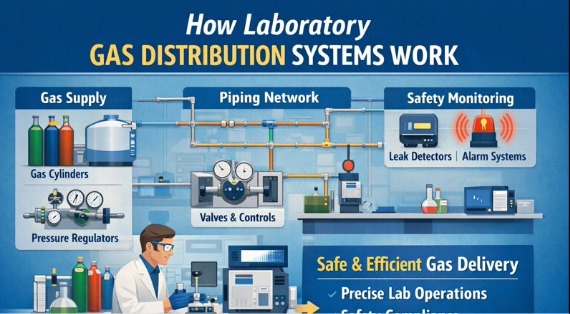
Understanding how a laboratory gas distribution system works requires familiarity with its main components, each of which plays a vital role in ensuring gas is delivered safely and efficiently. The first and most important element is the gas supply source, which may consist of compressed gas cylinders, bulk storage tanks, or liquid-to-gas conversion systems. The choice of source depends on the type of gas, the scale of laboratory operations, and the frequency of use. Bulk storage tanks are often used for high-consumption gases, while cylinders are suitable for smaller or specialty gases.
Next are regulators and pressure control devices, which ensure that the gas pressure entering the pipeline network is stable and appropriate for the laboratory’s requirements. Proper pressure regulation is critical for safety, as gases delivered at too high a pressure can damage instruments or pose risks to laboratory personnel. Pipelines, usually made of stainless steel or corrosion-resistant alloys, form the distribution network that connects the gas source to multiple workstations. These pipes are designed to maintain gas purity while withstanding pressure changes and preventing leaks.
Valves and isolation points allow operators to control gas flow to specific areas, facilitating maintenance, emergency shutdowns, and operational adjustments without affecting the entire system. End-point delivery units, such as gas outlets, manifolds, and connectors, provide easy and precise access to gases at laboratory benches or instruments. Finally, safety and monitoring devices—including gas detectors, alarms, and automatic shut-off systems—ensure that any leaks, pressure deviations, or unsafe conditions are detected and addressed immediately. Together, these components make up a laboratory gas distribution system that is safe, efficient, and capable of supporting a wide range of laboratory applications.
How Laboratory Gas Distribution Systems Operate
The operation of a laboratory gas distribution system is based on a carefully controlled and monitored process to ensure continuous, safe, and precise delivery of gases to multiple workstations. The process begins with the gas supply entering the regulators, where the pressure is reduced and stabilized for safe entry into the pipeline system. Without proper regulation, variations in pressure could cause equipment malfunctions or pose safety risks. Once regulated, the gas enters the distribution piping network, which branches out to serve different laboratory points efficiently.
At each workstation, valves and gas outlets provide controlled access to the required gas, allowing researchers to adjust flow rates based on experimental needs. Many modern laboratories incorporate automated systems that monitor flow and pressure continuously, ensuring optimal performance. Safety devices such as gas leak detectors, alarms, and emergency shut-off valves are integrated at key points to prevent hazards and ensure compliance with laboratory safety regulations. If a leak or abnormal pressure is detected, the system automatically alerts personnel and may shut off the affected section, minimizing risk.
Moreover, some advanced systems employ digital monitoring and control, often integrated with building management systems, allowing real-time tracking of gas usage, pressure levels, and system performance. These technologies not only improve safety but also enhance operational efficiency by optimizing gas consumption and reducing waste. The combination of regulation, controlled distribution, and continuous monitoring makes a laboratory gas distribution system a robust and reliable infrastructure, supporting a wide range of scientific and industrial applications. By understanding its operation, laboratory managers can ensure both the safety of personnel and the accuracy of experimental work, highlighting the indispensable role of these systems in modern laboratories.
Importance of Design, Maintenance, and Safety
The effectiveness of a laboratory gas distribution system depends heavily on its design, maintenance, and adherence to safety protocols. A well-planned system ensures smooth gas delivery, minimizes downtime, and reduces the risk of accidents. During the design phase, engineers consider factors such as gas type, lab layout, consumption rates, pressure requirements, and safety standards. Material selection, pipeline routing, and valve placement are critical decisions that impact system reliability, efficiency, and longevity.
Regular maintenance and inspection are equally vital. Leaks, clogged pipelines, and malfunctioning regulators can compromise safety and disrupt laboratory operations. Routine checks, pressure testing, and replacement of worn components are essential practices for maintaining system integrity. Furthermore, training laboratory personnel on proper operation and emergency protocols enhances the overall safety of the facility. Compliance with standards such as ISO, OSHA, and local safety regulations is a fundamental aspect of both design and operation, ensuring that the system meets legal and operational requirements.
Beyond safety, a properly designed and maintained system improves operational efficiency and reduces costs. Minimizing gas wastage, optimizing flow, and preventing unplanned downtime contribute to better resource management. Laboratories handling reactive, flammable, or toxic gases benefit significantly from integrated safety and monitoring systems, which protect personnel, equipment, and experimental outcomes. In summary, a laboratory gas distribution system is not just a functional utility but a cornerstone of laboratory safety, reliability, and efficiency, making thoughtful design, proactive maintenance, and strict adherence to safety protocols indispensable.
Applications of Laboratory Gas Distribution Systems
A laboratory gas distribution system is integral to a wide range of laboratory environments, from academic research labs to pharmaceutical production facilities and industrial testing centers. Its primary function is to ensure that gases are delivered efficiently, safely, and precisely to every workstation where they are needed. In chemical laboratories, for instance, gases such as nitrogen and hydrogen are used in reactions, chromatography, or instrument operation, requiring stable supply and controlled flow rates. The laboratory gas distribution system allows scientists to conduct experiments without interruption, ensuring reproducibility and reliability of results.
In pharmaceutical and biotechnology labs, gases like carbon dioxide, compressed air, and oxygen are critical for maintaining cell cultures, performing chemical synthesis, or operating analytical instruments. Centralized gas distribution eliminates the need for individual cylinders at each workstation, reducing clutter and enhancing safety. Additionally, advanced systems provide pressure regulation, flow monitoring, and automated shut-offs to protect sensitive samples and expensive equipment from gas fluctuations or accidental exposure.
Industrial laboratories also benefit significantly from these systems. For example, testing labs in electronics, material science, or aerospace industries often require specialty gases such as argon or helium for precision processes. A laboratory gas distribution system ensures that these gases are delivered consistently at precise pressures and flow rates. This not only guarantees the quality of the experimental or production process but also reduces operational risks, such as contamination, leaks, or accidental gas discharge.
Moreover, these systems support sustainability and resource efficiency. By minimizing gas wastage and optimizing supply, laboratories can reduce costs and environmental impact. Integration with digital monitoring systems allows real-time tracking of consumption, leak detection, and predictive maintenance, making modern laboratory gas systems both safer and more efficient. Ultimately, the applications of a laboratory gas distribution system extend across research, production, and testing environments, demonstrating its versatility and critical importance in maintaining safe, precise, and efficient laboratory operations.
Advances and Innovations in Laboratory Gas Distribution Systems
Over the past decade, laboratory gas distribution systems have evolved significantly, driven by advancements in technology, safety standards, and operational efficiency demands. Modern systems increasingly incorporate digital monitoring, automation, and smart controls, transforming traditional gas delivery infrastructure into intelligent, responsive networks. One major innovation is the use of IoT-enabled monitoring devices, which continuously track gas flow, pressure, and usage at multiple points throughout the laboratory. These devices provide real-time alerts for leaks, irregular pressure, or system malfunctions, enabling proactive intervention before problems escalate.
Automation is another key development in contemporary laboratory gas distribution systems. Automated control valves, flow regulators, and pressure stabilizers reduce manual intervention, improving operational efficiency and safety. Laboratories can now program gas delivery schedules, adjust flow rates remotely, and integrate gas system monitoring into broader lab management software. This integration allows seamless data collection and reporting, helping labs maintain regulatory compliance and optimize gas usage.
Sustainability and energy efficiency have also become central priorities. Advanced systems are designed to minimize gas waste through precise flow control, recover unused gases, and reduce energy consumption in compressed gas generation. Additionally, modular designs allow laboratories to expand or modify systems without extensive downtime, supporting scalability as research or production demands increase.
Innovations in safety have further strengthened laboratory gas distribution systems. Modern installations include multi-layered safety features, such as automatic shut-off valves, leak detection sensors, and emergency pressure relief mechanisms. Combined with rigorous monitoring and compliance with international safety standards, these systems provide a reliable and secure gas supply for complex laboratory operations. Overall, the integration of technology, automation, and smart monitoring has transformed laboratory gas distribution into a highly efficient, safe, and future-ready infrastructure essential for modern science and industry.
Best Practices for Maintenance and Safety
Proper maintenance and safety protocols are critical for the efficient operation of any laboratory gas distribution system. Even a well-designed system can pose risks if not maintained and monitored correctly. Regular inspections, scheduled maintenance, and strict adherence to operational guidelines ensure both system reliability and the safety of laboratory personnel. Routine procedures typically include checking for leaks, verifying pressure levels, testing regulators, inspecting pipelines, and ensuring that safety alarms and detectors are functioning correctly.
Laboratory managers must establish comprehensive maintenance schedules based on the types of gases used, frequency of use, and complexity of the distribution network. For high-risk or reactive gases, more frequent inspections are essential to prevent accidents. Additionally, personnel should be trained to handle minor operational issues, recognize early warning signs of system failures, and respond effectively to emergencies. Proper training minimizes downtime and reduces the risk of accidents that could compromise experiments or endanger staff.
Safety protocols should also include clear labeling of pipelines, valves, and gas outlets, making it easy for personnel to identify the correct gas and understand flow paths. Emergency shut-off procedures, ventilation checks, and proper storage of gas cylinders are additional best practices that complement a well-maintained laboratory gas distribution system. Compliance with regulatory standards such as ISO, OSHA, and local safety codes is mandatory, and regular audits help identify gaps in safety and operational efficiency.
Finally, adopting digital monitoring solutions can enhance maintenance and safety practices. Sensors, alarms, and automated logging systems provide continuous feedback on system performance, enabling predictive maintenance and reducing the likelihood of gas leaks or pressure fluctuations. By implementing these best practices, laboratories ensure that their laboratory gas distribution systems remain safe, reliable, and efficient, ultimately supporting uninterrupted research, testing, and production activities.
Conclusion
A laboratory gas distribution system is a cornerstone of modern laboratory infrastructure, combining safety, efficiency, and precision in gas delivery. From chemical and pharmaceutical research to industrial testing, these systems enable laboratories to maintain optimal conditions for experiments, instruments, and production processes. Understanding how a laboratory gas distribution system works, its components, applications, and safety requirements is essential for laboratory managers, engineers, and personnel involved in scientific operations.
Advances in digital monitoring, automation, and IoT-enabled safety features have transformed traditional systems into intelligent networks capable of real-time performance tracking, predictive maintenance, and optimized gas usage. Proper design, regular maintenance, and adherence to safety protocols are fundamental to ensuring system reliability, protecting personnel, and minimizing operational risks. The integration of smart technology, sustainable practices, and robust safety measures makes modern laboratory gas distribution systems both efficient and future-ready.
Ultimately, investing in a high-quality laboratory gas system is not just about operational convenience—it is about ensuring the safety of laboratory personnel, the integrity of experiments, and the success of scientific research. A well-designed and maintained system delivers reliable gas supply, supports precise laboratory work, and provides peace of mind, making it an indispensable asset for any modern laboratory.